If you’ve been freelancing on platforms like Fiverr or Upwork for a while, you’ll know this routine well – work, deliver, wait for payment, and then the cycle starts again. Everything seems fine in the beginning, but there comes a time when you’re just waiting for a message from the client. Work slows down, earnings aren’t as expected, and it feels like time is being wasted.
I’ve been blogging, freelancing, and content writing for the last five years, and I’ve faced this phase many times. Starting freelancing is definitely a solid step, but in my experience, it also leaves you a little vulnerable. A few years ago, I was in exactly this situation.
Then one day, I decided it was time to move on.
That’s when I started trying content creation—not just as a side hustle, but as a core part of my freelancing strategy.
ALso Read: How to Earn Money Online Without Any Special Skills
I did a lot of research on the internet on how to get out of this waiting cycle. This waiting eats away at me from within. I was seriously tired.
There came a time when I was about to quit freelancing. I started to feel like I had to just wait and see and nothing else.
To be honest, this whole game is about strategy. Following the right strategy can change direction. That’s the strategy I’m talking about.
In this guide, I’ll share how content creation is no longer just a good option for freelancers, but a necessity.
I’ll also share my experience with website design and marketing freelancing, and what I’ve seen working with other designers, writers, and IT service providers.
We’ll talk about the real reason, how to do it the right way, and the gaps that most advice overlooks.
If you’re tired of relying on the freelance marketplace, stick with me. This isn’t some viral trick. It’s not about running away, it’s about building a sustainable career on your own terms.
The Problem with Relying Only on Freelance Platforms
Look, if you rely solely on the platform, earning will never be consistent. You need to create a system that provides regular income.
For a simple example, if you’re earning a dollar, the system should be such that you can earn a dollar daily. Not a dollar one day, then nothing for 10 days, then a dollar again one day. This is clearly not sustainable long term.
So let’s discuss why content creation has become so important for freelancers.
Honestly, freelance platforms are great for beginners. They connect you with clients quickly and take care of a lot of the admin headaches.
One plus point of platforms like Fiverr and Upwork is that the payment system is secure. It’s happened to me that when I get a client directly from LinkedIn, the biggest risk is payment.
Platforms help in this regard, and it feels perfectly fine in the beginning.
The problem starts when you become completely dependent on these platforms. Freelancers who put themselves 100% at the mercy of the platform, over time, get lost in the crowd.
Algorithms evolve and change. Fees gradually increase, and the quality of clients is sometimes high, sometimes very low. I’ve experienced this myself many times.
How Content Creation Changes Everything for Freelancers
Content creation flips the game on its head. Instead of finding clients, clients find you.
When you share your expertise, you create your own personal ecosystem, where multiple opportunities arise. It’s like sowing seeds in your own garden, not wandering around in someone else’s.
Imagine if a potential client sees your post explaining how to optimize website load time, and you’re in web development like I am, they’re not just looking for a service. They’re looking for proof that you know how to do the job.
This is where trust is built and the sales cycle is almost halved.
Personal branding may seem like a heavy word in the corporate world, but for freelancers, it’s a secret weapon.
While everyone’s profiles look almost the same, it’s the content that makes you memorable.
In my experience, the real magic happens when you stop selling and start teaching.
If you’re a graphic designer, instead of just showing off your portfolio, explain which color palette converts best.
If you’re in IT support, share quick fixes to common software problems that save businesses time.
When you create useful content instead of just showcasing your skills on a simple page or website, you automatically stand out from many freelancers.
In fact, if I were to hire freelancers, I would always choose a freelancer whose work I could clearly understand, whose experience was visible, and who I felt could do the job well.
That’s why I personally recommend that if you are a freelancer and want to break out of this waiting cycle, there are many powerful things in content creation that make this approach strong.
When you build relationships through content, your audience doesn’t just see you as a vendor. They start seeing you as an expert.
The biggest advantage is that you can then decide your own fees. When trust is built, price discussions aren’t so tough.
A strong point of the Creator approach is that when people benefit from your free advice, they are also willing to pay for deeper help.
I have a YouTube channel called Blogging Tips where I share blogging, SEO, content writing and my personal journey.
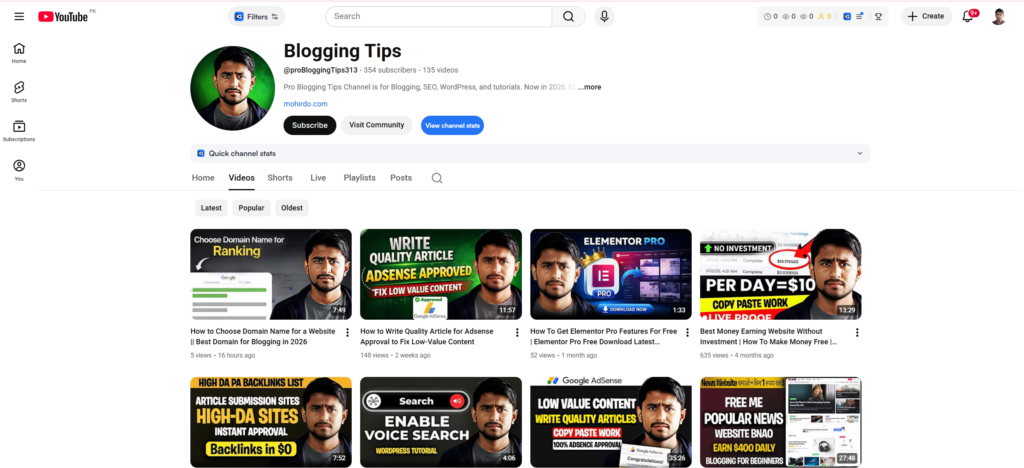
From there, many people contact me directly on WhatsApp and get work done on their website. All this simply because they’ve already derived value from my content.
Why Content Creation Is Unique for Freelancers
Creating content for freelancers is a little different. Most content advice is for businesses or influencers.
But freelancers have their own unique edge. Companies have marketing teams, but for freelancers, you’re the brand itself.
Your skills, your insights, and your personality are what set you apart. Content gives you the opportunity to showcase all of this, something a simple gig description can never do.
Freelance content stands out because it manages the cycle of ups and downs. When you post consistently, a buffer is created.
Even if there are slow periods, your old content continues to generate leads in the background.
This also pre-qualifies clients. When people come across your content, they already have an idea of your value. Then, there’s no time wasted explaining basic things in proposals.
Content deepens your expertise. When you learn a topic, you organize your thoughts. This happened with me too.
I thought I knew some topics perfectly, but when I started making videos on them, my process became more refined.
Content also opens unexpected doors. Collaborations, speaking opportunities, and other opportunities you don’t get with platform work alone.
And one important thing people miss is burnout. When freelancing starts to feel transactional, interest wanes.
Content creation reminds you why you chose this skill in the first place. It acts as creative fuel that keeps passion alive.
What Kind of Content Should Freelancers Create?
Start creating content today. If you’re a freelancer, actually create; don’t just think. Don’t overthink.
The best content is what you generate from your daily work. The problems you solve are the strongest content. The actual work you do in your freelancing service is the best material for you.
Focus on formats that work well for freelancers.
- Short video reels or stories, 15- to 60-second quick tips, like “How I fixed a client’s broken landing page in 10 minutes.”
- LinkedIn posts or threads can be a little detailed but should be easy to scan, step-by-step case study type.
- Share your behind-the-scenes workflow on Instagram or Facebook. This helps people see you in a human way and builds a connection.
- Blog posts or newsletters can be a little longer form. Reuse your video script here for SEO and email lists.
Create content specific to your niche.
- If you’re a marketing freelancer, share a campaign breakdown.
- If you’re a designer, show before and after transitions or explain how you fixed a design.
- If you’re a writer, share editing hacks or quick tips.
- If you’re a developer, show code snippets or tool reviews.
The most important thing is that the content is actionable and relatable. People scroll for solutions, not sales pitches.
Case Study: How I turn ‘AdSense Problems’ into Content
I mostly create content like this myself. Like a client comes and says that my website is not getting approved by Google AdSense, then I first analyze the website and give them a proper guide as to what is the issue and how to fix it.
Along with this, I also make a YouTube video on that topic where I explain in a simple way what is the solution to this problem.
The client pays me, but I share the same knowledge with the audience for free. This creates a strong hook, people get engaged and my value increases.
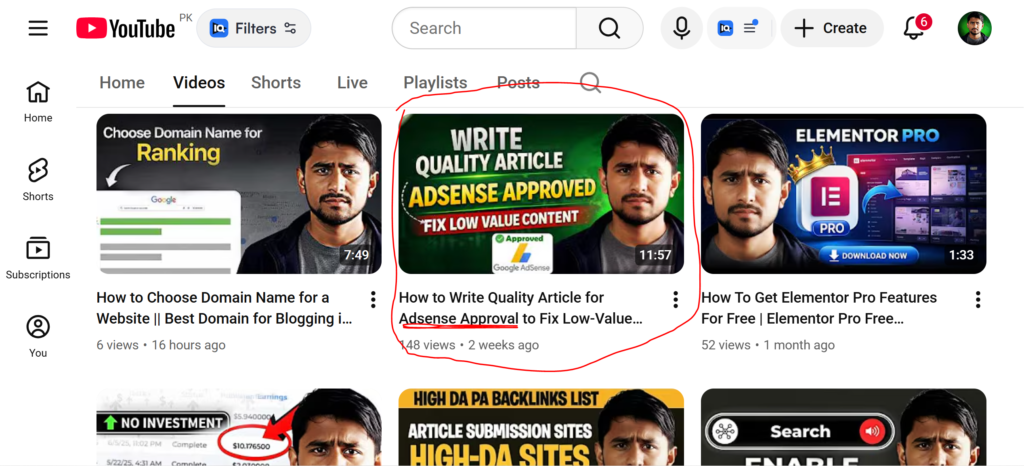
At the end of the video, I clearly say that if you do not have time to do all this yourself, then you can hire me.
I have already mentioned the method, if you want to follow it then do it yourself, otherwise I can help you at this price.
Most of the freelance clients do not have time, so they hire you.
I also get many people who say that their company has given them work but they do not have time, so they directly ask me to do it.
So you can also follow this approach.
Choosing the Right Platforms for Your Content
Choose the right platform according to your niche. There is no need to be everywhere. Choose only two or three platforms where your ideal clients are already active.
From my experience, LinkedIn is like gold for a B2B freelancer. Post professionally, join groups, and engage in comments. Discussions matter here; don’t just stay silent.
Facebook is a good place to start locally. Create a Page or join groups in your niche. As your network grows, your reach expands.
YouTube is best for those who enjoy long-form content and can delve a little deeper and explain. Even short clips can lead viewers to your services.
One thing people tend to skip is smart cross-posting. Give a strong hook at the beginning of the video to get people to stop and watch.
Then reuse that content in LinkedIn threads, Instagram stories, or YouTube Shorts. Tools like Buffer make scheduling easy.
Start where you feel natural. Always share what comes naturally to you.
Simple Steps to Start Content Creation Today
Follow these simple steps to get started. Consistency matters more than perfection. Start small.
The system I use is simple. I list 10 problems I solve for clients each week. These are my content ideas.
If my clients are facing these problems, there are likely many others facing the same issues. By helping them, you can build your audience.
Create batches. Set aside one day a week to record 5 to 7 videos or draft multiple posts and schedule them.
Posting daily isn’t always possible, so scheduling is essential.
Focus more on the types of content that are getting the most engagement. Converting a video into a post, story, email, or pin doesn’t take much time.
If you are short on time, target only 3 posts a week. Quality improves with time. Your 10th post will always be better than the first.
I also make short and long form videos by understanding the real problems of the users so that I can guide them.
If you feel that content creation with freelancing is difficult and you don’t get time, then let me tell you what I do.
When I do client work, I keep saving the ideas of that process in a notepad. I think that this is a problem, a video can be made on it.
Gradually, 20-25 ideas come up. Then whenever client work slows down, that is the perfect time to create content.
Sometimes I even write ideas late at night, between 1 and 3 am, when I’m free. I create small pieces of content, then schedule them.
Both YouTube and LinkedIn have scheduling options. Audiences feel like content is coming daily, and I stay connected while also managing my freelancing.
You can also follow this approach. Just manage your time smartly so that you can balance client work, content creation, and a little rest.
The Real Results I’ve Seen from Consistent Content
When I created content consistently for six months, my freelance income pattern changed.
Now people see me not just as a freelancer, but as a teacher and mentor.
The clients who come through my posts also get better results because they already understand my value.
But things that aren’t measured in numbers are even better. Now I don’t feel like I’m wasting my time.
Now I create content because I feel a personal joy inside, like I’m doing something meaningful.
Many of my freelancer friends, graphic artists, copywriters, and coders, are experiencing the same thing.
Their results may be small right now, but when you invest your time in content creation in the right way, the benefits are definitely there.
I want to clarify one thing. It’s not necessary that it takes six months, a year, or two to see results.
Sometimes results can come in a week, sometimes a little later. It doesn’t depend on whether you’ll see results or not, but on whether you’re consistent or not.
That’s why it’s important to stay positive. This isn’t a trick to get clients instantly. It’s a natural process when people connect with you.
Your job is to continuously provide them with value. This is the simplest shortcut.
If you’re consistent and keep providing value to users, the impact will gradually become apparent.
Content creation isn’t a quick fix. It’s a skill that pays off over time.
Relying solely on platforms isn’t a good strategy in today’s freelance world. You need to create more opportunities for yourself.
Platforms are fiercely competitive, and content creation is the most reliable way to take back control.
I myself have moved beyond chasing gigs for this reason.
And the best part is, you don’t need a huge audience or to go viral. All you need is consistency.
Keep creating content with value. Instead of waiting for clients, start creating content.
Your favorite freelancing project could be your content idea. Make your plan today and start creating content.
What has your experience been? Have you tried content as a freelancer? Share it in the comments. I’d love to know what’s working for you.

Ghulam Muhiudeen is a passionate blogger, SEO specialist, and online earning expert. He started his career with freelancing and provided content writing and website designing services on Fiverr from 2022 to 2024. During this time, he experienced firsthand the market’s intense competition, algorithm changes, and inconsistent income.