


What Is Pillar Content and Why It Matters in 2026
If you’ve been blogging for any length of time, you’ve probably heard the term “pillar content” thrown around in SEO circles. But what does it actually mean, and more importantly, why should you care? Here’s the straight answer: pillar content is the backbone of a modern content strategy, and in 2026, it’s one of the most effective ways to build topical authority and dominate search rankings.
Pillar content — sometimes called a cornerstone article, pillar page, or pillar post — is a comprehensive, in-depth resource that covers a broad topic completely. Think of it as the ultimate guide on a subject. A pillar article on “SEO for bloggers” wouldn’t just skim the surface — it would cover keyword research, on-page optimization, technical SEO, link building, content strategy, analytics, and everything in between. It’s the kind of resource that makes someone bookmark your site and never need to look elsewhere.
Google’s algorithms have evolved significantly over the past few years. The search engine is now incredibly good at understanding topical relationships between concepts. Instead of ranking individual pages in isolation, Google increasingly evaluates how your entire body of content relates to each other. When you create a comprehensive pillar article supported by a cluster of related content, you’re sending a powerful signal: “I’m an authority on this entire topic, not just one piece of it.”
This guide walks you through everything you need to know about creating pillar content in 2026 — from choosing the right topics to building internal linking structures that maximize your SEO impact. If you’re serious about growing your blog’s traffic, pillar content isn’t optional anymore. It’s foundational.
Topic Clusters: The Framework Behind Pillar Content
How Topic Clusters Work
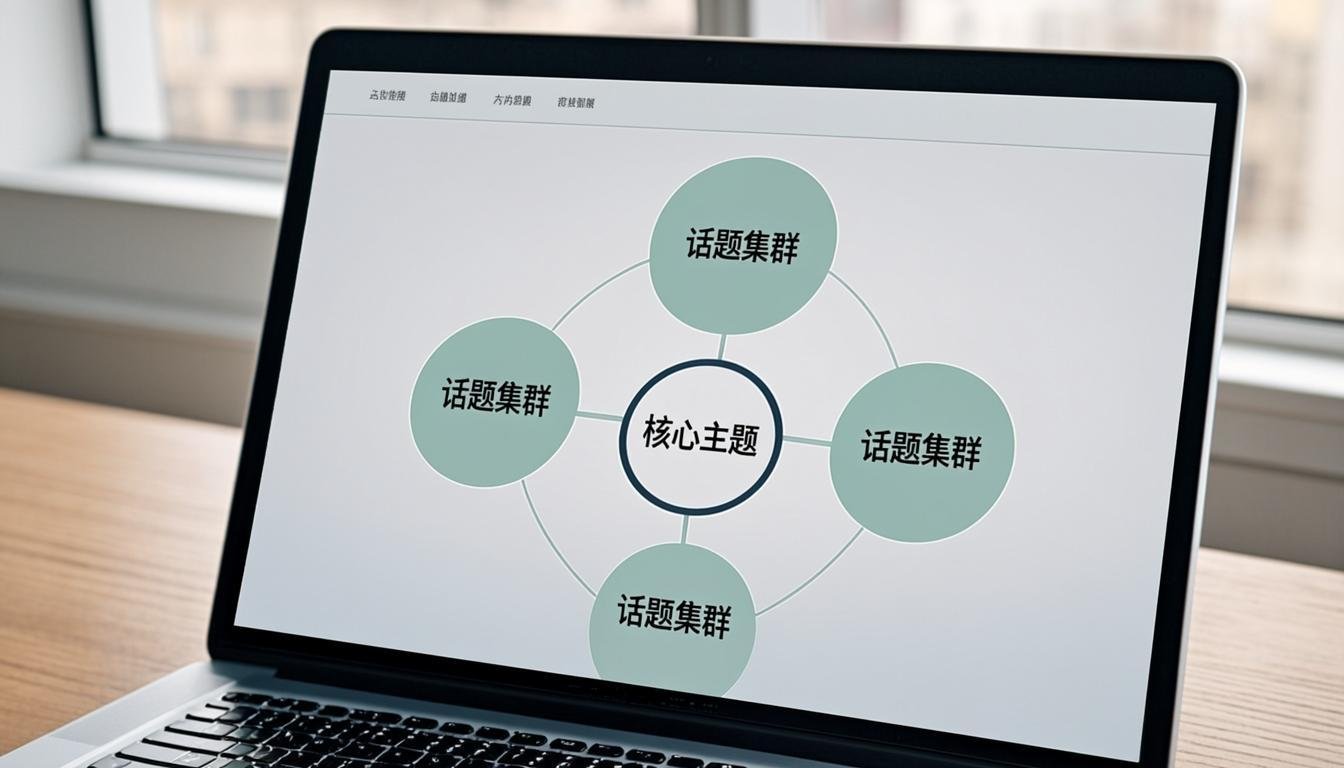
A topic cluster is a strategic content architecture built around three components:
- Pillar content: A comprehensive guide covering a broad topic in depth.
- Cluster content: Multiple focused articles that explore specific subtopics in detail.
- Internal links: A strategic linking structure that connects all cluster content back to the pillar and vice versa.
The concept was popularized by HubSpot in 2017, and by 2026 it’s become one of the most widely adopted content strategies among successful blogs and businesses. Here’s why it works: instead of having dozens of disconnected blog posts competing against each other, a topic cluster creates a tightly interconnected web of content that reinforces topical relevance.
The Anatomy of a Topic Cluster
Let’s say your blog covers personal finance. Your pillar content on “Complete Guide to Personal Finance” would cover the broad topic, while your cluster content would include focused articles like:
- “How to Create a Monthly Budget” (cluster article → links to pillar)
- “Best High-Yield Savings Accounts in 2026” (cluster article → links to pillar)
- “Beginner’s Guide to Index Fund Investing” (cluster article → links to pillar)
- “How to Pay Off Credit Card Debt Fast” (cluster article → links to pillar)
- “Emergency Fund Calculator: How Much Do You Need?” (cluster article → links to pillar)
Each cluster article is linked back to the pillar page, and the pillar page links out to every cluster article. This creates a clear topical relationship that Google can easily understand and reward.
Why Topic Clusters Outperform Traditional Blogging
| Traditional Blogging | Topic Cluster Strategy |
|---|---|
| Random topics, no organizational structure | Organized around core topics |
| Competing pages for similar keywords | Clear keyword mapping — no cannibalization |
| Weak internal linking | Strategic hub-and-spoke linking |
| Topical gaps in coverage | Comprehensive topic coverage |
| Difficult to establish authority | Builds topical authority systematically |
| Lower average time on page | Higher engagement through deep resources |
How to Choose the Right Pillar Topics
What Makes a Great Pillar Topic?
Not every topic deserves pillar-level treatment. A great pillar topic should meet these criteria:
- High search volume: The topic should have enough search demand to justify the effort of creating a comprehensive resource. Look for topics with 1,000+ monthly searches.
- Broad scope: The topic should be expansive enough to support 8-15 subtopic articles. A narrow topic like “how to change a bike tire” doesn’t work well as a pillar — but “complete cycling guide for beginners” does.
- Business relevance: Choose topics that align with your blog’s mission and monetization strategy. If you monetize through affiliate marketing, your pillar topics should cover product categories you can recommend.
- Informational intent: Pillar content typically targets informational queries. Transactional keywords (product names, buying intent) work better as cluster articles that link back to the pillar.
- Evergreen potential: The best pillar topics have lasting relevance. While they’ll need periodic updates, the core framework should remain useful for years.
Research Methods for Finding Pillar Topics
Method 1: Keyword Research
Start with broad seed keywords in your niche and look for high-volume, informational queries. Tools like Ahrefs, Semrush, and Ubersuggest can help you identify topics with strong search demand. Look for keywords with informational intent modifiers like “guide,” “how to,” “what is,” “complete,” “ultimate,” and “beginner.”
Method 2: People Also Ask Analysis
Search your broad topic in Google and examine the “People Also Ask” (PAA) box. The questions listed there represent subtopics that searchers care about. If a single query generates 8-10 PAA questions, it’s a strong pillar candidate because it indicates a broad topic with multiple subtopics people want to explore.
Method 3: Competitor Content Analysis
Analyze your competitors’ most-trafficked content. If a competitor has a comprehensive guide that ranks well and drives significant traffic, that’s a clear signal that the topic has demand. Use competitor analysis techniques to identify these opportunities.
Method 4: Audience Questions
Your audience tells you what they want to know — you just need to listen. Check your blog comments, social media DMs, email questions, and support inquiries. Recurring questions make excellent cluster topics, and the broader theme they fall under makes a natural pillar topic.
Pillar Topic Evaluation Scorecard
| Criteria | Score (1-5) | Notes |
|---|---|---|
| Search volume (1,000+ monthly) | — | Check in keyword research tool |
| Number of subtopics possible (8+) | — | Map out potential cluster articles |
| Business relevance (supports monetization) | — | Aligns with affiliate, product, or service goals |
| Competition level (not dominated by authority sites) | — | Check SERP — can you realistically compete? |
| Content quality of existing results | — | Can you create something significantly better? |
Score each potential pillar topic out of 25. Prioritize topics that score 18 or above — they offer the best combination of demand, opportunity, and strategic value.
Writing Comprehensive Pillar Content
How Long Should Pillar Content Be?
There’s no magic word count, but pillar content is typically 3,000-8,000 words. The length should be determined by the breadth of the topic, not an arbitrary target. A truly comprehensive guide on “SEO for Beginners” might naturally hit 5,000 words because the topic requires covering keyword research, on-page SEO, technical SEO, link building, and analytics. Forcing brevity means leaving gaps that competitors can exploit.
That said, don’t pad your content to hit a word count. Every paragraph should add value. If you can thoroughly cover a topic in 2,500 words, write 2,500 words. Quality and comprehensiveness matter infinitely more than raw length.
Structuring Your Pillar Article
A well-structured pillar article is easy to navigate, which keeps readers on the page longer and helps search engines understand your content hierarchy. Here’s a proven structure:
1. Introduction (200-400 words)
- Hook the reader with a compelling problem statement
- Explain what the guide covers and who it’s for
- Include a table of contents with jump links
- Set expectations for the depth and length of the guide
2. Core Sections (200-800 words each)
- Cover each major subtopic as a clearly defined H2 section
- Use H3 and H4 headings for sub-subtopics within each section
- Include actionable advice, examples, data, and original insights
- Link to relevant cluster articles for deeper dives on specific subtopics
3. Supporting Elements
- Tables for comparisons and data
- Step-by-step checklists for actionable processes
- Images, diagrams, or infographics to illustrate complex concepts
- Expert quotes or case studies to add credibility
- Embedded videos for multimedia learners
4. Conclusion and Next Steps
- Summarize the key takeaways
- Direct readers to related cluster content for next steps
- Include a clear CTA (subscribe, download a resource, etc.)
Writing Tips for Pillar Content
- Start with an outline: Map out every section before you write a single word. This prevents tangents and ensures comprehensive coverage.
- Write in sections: Don’t try to write a 5,000-word article in one sitting. Write one section at a time, ideally in the order your outline dictates.
- Include original insights: Anyone can regurgitate existing information. The pillar articles that stand out include original data, personal experience, unique case studies, or expert perspectives.
- Use formatting strategically: Break up long sections with tables, lists, callout boxes, and images. When you’re writing blog posts, readability is just as important as depth.
- Optimize for featured snippets: Include clear, concise answers (40-60 words) at the beginning of relevant sections. This increases your chances of capturing PAA and featured snippet positions.
- Add a table of contents: A clickable table of contents improves user experience and can generate jump link sitelinks in Google search results.
Creating Supporting Cluster Content
What Makes Good Cluster Content?
Cluster articles are focused, specific pieces that explore individual subtopics in detail. While the pillar article provides an overview of each subtopic, the cluster article goes deep. If your pillar says “Use keyword research to find content opportunities,” your cluster article on keyword research explains exactly how to do it — step by step, with screenshots, examples, and tool recommendations.
Cluster Content Characteristics
- Length: Typically 1,500-3,000 words — focused enough to be actionable but deep enough to be valuable.
- Format: Can be any format — how-to guides, tutorials, reviews, comparisons, case studies, or listicles.
- Target keyword: Each cluster article targets a specific long-tail keyword related to the pillar topic.
- Links: Every cluster article must include a prominent link back to the pillar page. This is non-negotiable.
- Value add: Cluster content should provide something the pillar doesn’t — deeper detail, different angle, specific examples, or actionable steps.
How Many Cluster Articles Should You Create?
The number depends on your topic’s breadth and your content calendar. A solid starting point is 8-12 cluster articles per pillar. Larger topic areas might support 15-20 cluster articles. The key is covering the topic comprehensively — every question someone might have about the pillar topic should be addressed somewhere in your content cluster.
Cluster Content Planning Template
| Cluster Article | Target Keyword | Search Volume | Keyword Difficulty | Content Format | Status |
|---|---|---|---|---|---|
| Keyword Research for Beginners | keyword research for beginners | 2,400 | 25 | How-to guide | Published |
| On-Page SEO Checklist | on-page SEO checklist | 3,100 | 30 | Checklist | In progress |
| Best SEO Tools for Bloggers | best SEO tools bloggers | 1,800 | 28 | Listicle | Planned |
| How to Build Backlinks | how to build backlinks | 5,400 | 45 | Comprehensive guide | Planned |
| Technical SEO for WordPress | technical SEO WordPress | 1,200 | 22 | Tutorial | Planned |
Building an Internal Linking Structure That Powers Rankings
Why Internal Links Are the Glue of Topic Clusters
Internal links serve two critical purposes in a topic cluster strategy. First, they help search engines understand the relationship between your content — Google follows links to discover how pages relate to each other. When every cluster article links to the pillar and the pillar links to every cluster article, Google builds a clear mental model of your topical structure.
Second, internal links distribute link equity (also called “link juice”) throughout your cluster. When an external site links to one of your cluster articles, some of that authority flows to the pillar page through internal links. This strengthens the entire cluster.
Internal Linking Best Practices for Topic Clusters
- Every cluster article links to the pillar: Use descriptive anchor text that includes the pillar’s target keyword. Place the link prominently — in the introduction, a callout box, or the first few paragraphs.
- The pillar links to every cluster article: Include links to cluster articles within the relevant pillar sections. If your pillar has a section on keyword research, that’s where you link to your keyword research cluster article.
- Cross-link between cluster articles: Where relevant, cluster articles should link to each other. If your backlink building article mentions guest posting, link to your guest posting guide. This creates a dense web of topical connections.
- Use descriptive anchor text: Avoid generic anchor text like “click here” or “read more.” Use descriptive text that tells both readers and search engines what the linked page is about.
- Keep links contextual: Internal links should feel natural within the content. Don’t force links where they don’t make sense.
- Limit outgoing links per page: Don’t go overboard. A cluster article should have 3-8 internal links (including the pillar link). The pillar page can have more since it naturally references many subtopics.
Internal Link Anchor Text Examples
| Bad Anchor Text | Good Anchor Text | Context |
|---|---|---|
| Click here | Read our complete keyword research guide | Linking to cluster article from pillar |
| Learn more | Our pillar article covers SEO fundamentals in depth | Linking to pillar from cluster |
| This article | This backlink building guide explains 12 proven strategies | Linking between cluster articles |
| See this | Google Search Console helps you monitor your search performance | Contextual tool mention |
| Link | Our WordPress theme comparison breaks down speed and SEO features | Linking to a comparison article |
Updating and Maintaining Your Pillar Content
Why Pillar Content Needs Regular Updates
Pillar content is a living resource, not a “publish and forget” project. In fast-moving niches like technology, marketing, and finance, information becomes outdated quickly. Even in more stable niches, search algorithms evolve, competitors improve their content, and user expectations change. If your pillar content from 2024 hasn’t been updated, it’s losing ground.
Google values fresh content, and content freshness is a known ranking signal for certain query types. Regularly updated pillar content signals to Google that your resource is current, authoritative, and worth ranking at the top.
How to Update Pillar Content Effectively
Quarterly Reviews (Every 3 Months)
- Check for broken links and fix them
- Review comments and questions — add answers to the content
- Verify that all statistics, data points, and tool recommendations are current
- Check if any new cluster articles have been published that should be linked
- Review Google Search Console data for the pillar — are rankings improving or declining?
Semi-Annual Deep Updates (Every 6 Months)
- Compare your pillar content against the current top-ranking results. Has a competitor published something better?
- Add new sections covering emerging subtopics or trends
- Refresh screenshots, examples, and case studies
- Update the “last modified” date to signal freshness to Google
- Evaluate keyword targeting — have search volumes or intent changed?
- Consider adding video, interactive elements, or downloadable resources
Annual Overhaul (Every 12 Months)
- Full content audit against competitor benchmarks
- Restructure sections if the topic landscape has shifted significantly
- Rebuild internal links — add new cluster articles, remove outdated ones
- Consider expanding into a new pillar topic based on insights from existing clusters
- Refresh the design and visual elements
Content Freshness Indicators
| Signal That Content Needs Updating | Action Required | Priority |
|---|---|---|
| Rankings declining for target keyword | Compare against competitors, identify gaps | Critical |
| Broken links (internal or external) | Replace or remove broken links | High |
| Outdated statistics or data | Find current data and update references | |
| New subtopic trending in PAA/SERP | Add section covering the new subtopic | |
| Competitor published a better resource | Analyze their content, upgrade yours | |
| Comments asking questions not covered | Add FAQ section or expand relevant sections | |
| Tool or product recommendations outdated | Re-evaluate and update recommendations |
Measuring the Success of Your Pillar Content Strategy
Key Performance Indicators (KPIs) to Track
How do you know if your pillar content strategy is working? Track these KPIs:
1. Organic Traffic to the Pillar Page
Use Google Analytics or your preferred analytics tool to track monthly organic traffic to your pillar page. A successful pillar page should see steady traffic growth over 3-6 months, eventually plateauing at a higher level as it establishes its ranking position.
2. Keyword Rankings
Track your pillar page’s ranking for its target keyword and related terms. Use Google Search Console or a rank tracking tool like Semrush or Ahrefs. Look for gradual improvement — pillar content typically takes 3-6 months to reach its ranking potential.
3. Engagement Metrics
- Time on page: Pillar content should have significantly higher average time on page than your regular blog posts. 4+ minutes is a strong benchmark for a comprehensive guide.
- Scroll depth: Use tools like Microsoft Clarity or Hotjar to see how far readers scroll. If most readers bounce after the first section, your content may need better hooks or more engaging formatting.
- Bounce rate: While bounce rate has nuances, a pillar page with a bounce rate below 70% suggests the content is meeting expectations.
4. Internal Link Click-Through Rate
Track how many readers click from your pillar page to cluster articles (and vice versa). High internal link click-through rates indicate that your content is effectively guiding readers deeper into your site.
5. Conversion Metrics
If your pillar content includes a CTA (newsletter signup, lead magnet, product recommendation), track the conversion rate. Pillar content typically converts at 2-3x the rate of regular blog posts because the audience is more engaged and the content builds more trust.
6. Backlink Acquisition
Monitor how many backlinks your pillar content earns over time. Comprehensive, well-formatted pillar pages naturally attract links from other sites. Use Ahrefs or Moz to track new backlinks to your pillar pages.
Pillar Content Performance Dashboard
| Metric | Target (3 months) | Target (6 months) | Target (12 months) |
|---|---|---|---|
| Organic monthly sessions | 200-500 | 1,000-3,000 | 3,000-10,000+ |
| Average time on page | 3+ minutes | 4+ minutes | 5+ minutes |
| Keyword ranking | Page 2 (11-20) | Page 1 (5-10) | Top 5 |
| Backlinks earned | 5-10 | 15-30 | 50+ |
| Internal clicks to cluster | 50-100/month | 200-500/month | 500-1,500/month |
| Email subscribers from CTA | 10-25/month | 30-75/month | 75-200/month |
These targets are benchmarks for a well-executed pillar strategy. Actual results depend on your niche’s competitiveness, your domain authority, and the quality of your content. If you’re just starting out with free blogging tools, focus on content quality first — traffic will follow.
Common Pillar Content Mistakes and How to Avoid Them
- Choosing topics that are too narrow: If you can’t identify at least 8 subtopic articles, the topic is too narrow for a pillar page. It might work better as a cluster article under a broader pillar.
- Writing fluff to hit word counts: Every paragraph in a pillar article should add unique value. If you’re padding content with filler, readers will notice — and bounce.
- Forgetting to link cluster articles back to the pillar: This is the most common and most damaging mistake. Every cluster article must link to the pillar. If it doesn’t, your topic cluster is broken.
- Ignoring content freshness: A pillar article that hasn’t been updated in 18 months is losing ground to competitors. Schedule regular reviews and updates.
- Cannibalizing your own keywords: Make sure your pillar and cluster articles target distinct keywords. If both target the same primary keyword, they’ll compete against each other in search results.
- Poor navigation design: A 5,000-word wall of text without a table of contents, headers, or visual breaks is unreadable. Invest in formatting and design.
- Publishing without a content calendar: Don’t publish a pillar page and then take months to create the supporting cluster content. Plan your entire cluster in advance and publish systematically.
Pillar Content Examples Across Different Niches
| Niche | Pillar Topic | Sample Cluster Articles | Monetization Angle |
|---|---|---|---|
| Personal finance | Complete Guide to Personal Finance | Budgeting, saving, investing, debt payoff, credit scores | Financial product affiliates, courses |
| Tech blogging | Ultimate Guide to Home Office Setup | Desks, chairs, monitors, keyboards, lighting, cable management | Amazon Associates, product reviews |
| Complete Beginner’s Guide to Fitness | Nutrition, workout plans, equipment, recovery, supplements | Supplement affiliates, coaching | |
| Travel | Guide to Budget Travel in Southeast Asia | Destinations, flights, accommodation, food, visas, packing | Booking affiliates, travel insurance |
| Food/blogging | Complete Guide to Meal Prep | Containers, recipes, storage, freezing, shopping lists, nutrition | Product affiliates, recipe ebooks |
Frequently Asked Questions About Pillar Content
How long does it take for pillar content to rank?
Most pillar content takes 3-6 months to reach its ranking potential. Google needs time to crawl, index, and evaluate your content against competitors. During this period, focus on building internal links from cluster articles, earning external backlinks, and updating the content based on performance data. Pillar content is a long-term investment — the blogs that see the best results are patient and consistent.
Can I have multiple pillar pages on the same blog?
Absolutely — and you should. Most established blogs have 3-10 pillar pages covering different core topics. Each pillar page operates as the hub of its own topic cluster. The key is choosing distinct pillar topics that don’t overlap. If you have overlapping pillar topics, you risk keyword cannibalization and confusing both users and search engines.
What’s the difference between pillar content and a regular blog post?
The main differences are depth, breadth, and strategic purpose. A regular blog post typically covers a single topic in 1,000-2,000 words. Pillar content covers a broad topic comprehensively in 3,000-8,000 words, serves as the hub for an entire topic cluster, and is designed to be a long-lasting, authoritative resource. Pillar content gets updated regularly; regular blog posts often don’t.
Should I publish the pillar page first or the cluster articles?
It depends on your strategy. Publishing the pillar first gives Google the broad context immediately. Publishing cluster articles first allows you to build initial traffic and internal links before launching the pillar. Most bloggers find success by publishing the pillar first, then releasing 1-2 cluster articles per week. This gives you a complete foundation to build on.
How many pillar pages should my blog have?
For a newer blog (under 100 posts), start with 2-3 pillar pages. For an established blog with hundreds of posts, 5-10 pillar pages is appropriate. The right number depends on your niche’s breadth and your content creation capacity. It’s better to have 3 excellent pillar pages with fully developed clusters than 10 half-baked ones.
Does pillar content really help with SEO, or is it just a trend?
Pillar content and topic clusters are backed by how Google’s algorithms actually work in 2026. Google’s Helpful Content System and its understanding of entity relationships mean the search engine increasingly evaluates topical coherence. A well-structured topic cluster demonstrates deep expertise on a subject, which directly supports higher rankings. This isn’t a trend — it’s how successful SEO is done.
Can I turn existing blog posts into a topic cluster?
Yes, and this is one of the most practical ways to implement the strategy. Audit your existing content, identify posts that share a common theme, choose the most comprehensive one as your pillar, and restructure the others as cluster articles. Add internal links, update the pillar content to cover any gaps, and you’ve converted scattered posts into a strategic topic cluster.
How do I promote pillar content to earn backlinks?
Start by identifying sites that link to similar (but inferior) content. Use Ahrefs’ “Link Intersect” tool to find these opportunities. Then reach out with a personalized email highlighting how your pillar content provides more value. You can also promote pillar content through guest posting (linking to it naturally in author bios or within the post), social media, email newsletters, and by reaching out to educators or influencers who might find it useful for their audiences.
Building Your Pillar Content Strategy: A Step-by-Step Action Plan
Here’s your complete action plan for implementing a pillar content strategy on your blog:
- Audit your existing content: Identify themes, gaps, and high-performing posts that could serve as pillar or cluster content.
- Choose 2-3 pillar topics: Use the evaluation scorecard to select your first pillar topics based on search volume, breadth, and business value.
- Map your topic clusters: For each pillar topic, brainstorm 8-15 cluster article ideas with target keywords.
- Create a content calendar: Plan the publication schedule — pillar first, then 1-2 cluster articles per week.
- Write your first pillar article: Aim for 3,000-5,000 words, comprehensive coverage, and excellent formatting.
- Publish and build internal links: Connect everything with strategic internal linking.
- Publish cluster content systematically: Work through your planned cluster articles, linking each to the pillar.
- Promote actively: Share on social media, email your list, reach out for backlinks, and consider repurposing into other formats.
- Monitor performance: Track rankings, traffic, engagement, and backlinks monthly.
- Update quarterly: Keep your pillar content fresh, comprehensive, and competitive.
Pillar content is one of the most powerful strategies in a blogger’s toolkit. It builds topical authority, drives sustained organic traffic, earns backlinks naturally, and positions you as a go-to resource in your niche. The investment is significant — creating a comprehensive pillar article and its supporting cluster takes time and effort — but the returns compound over months and years. Start with one pillar, execute it well, and let the results speak for themselves.

Other Articles

How to Start a Niche Website That Makes Money (2026 Blueprint)
How to Do Competitor Analysis for Your Blog (2026)