
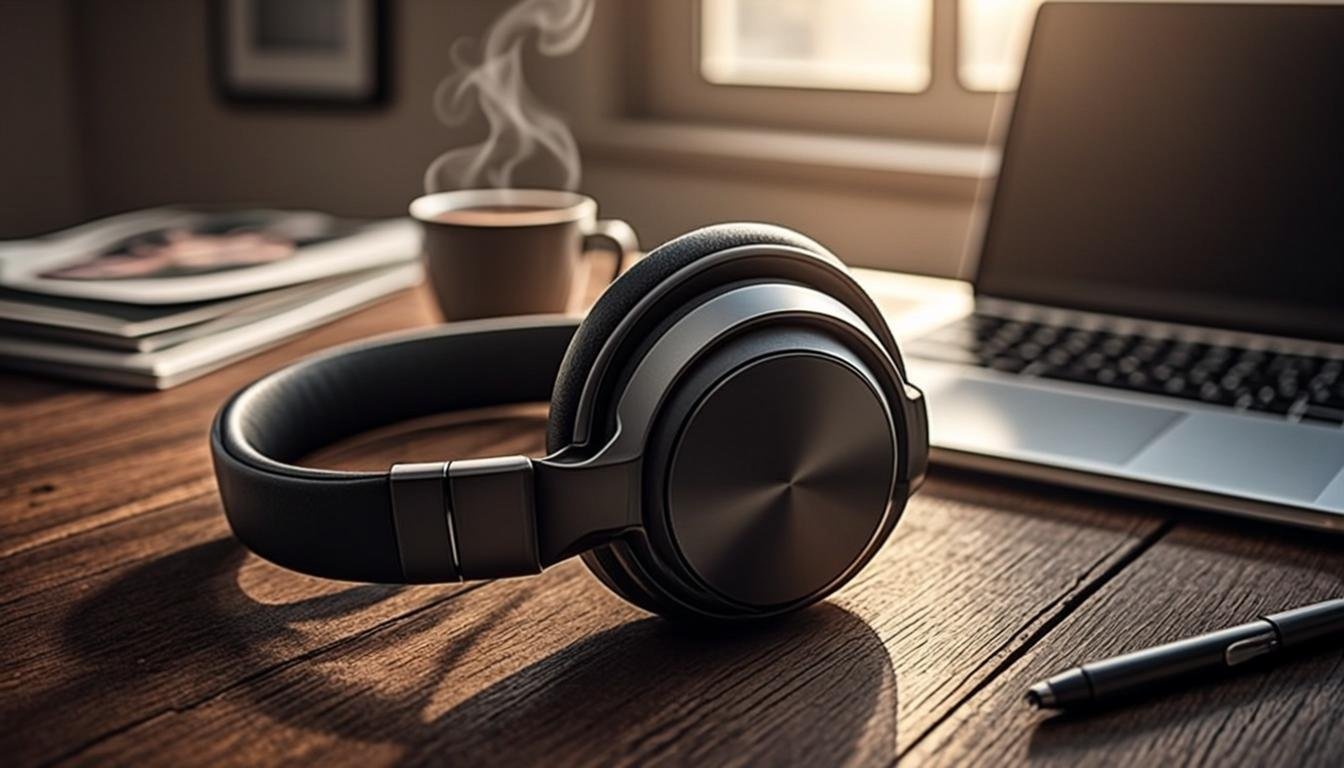

Why Noise Cancelling Headphones Are Essential for Remote Workers
If you’re working from home — or from a coffee shop, co-working space, or anywhere that isn’t a quiet office — you already know the struggle. The neighbor’s leaf blower kicks in right when you’re on a client call. Your kids decide that 10 AM is the perfect time for a living room drum solo. The dog starts barking at literally nothing.
Noise cancelling headphones aren’t a luxury for remote workers anymore. They’re essential equipment. The right pair doesn’t just block out annoying sounds — they help you focus better, sound more professional on calls, and actually enjoy your work environment instead of fighting against it.
I’ve been working remotely for years, and I’ve tested dozens of noise cancelling headphones across every price range. In this guide, I’m going to walk you through everything you need to know about choosing the best pair for your remote work setup, along with detailed reviews of the top options available in 2026.
Active Noise Cancellation vs Passive Noise Isolation: What’s the Difference?
Before we get into specific models, let’s clear up the terminology because it actually matters when you’re making a purchase decision.
Passive Noise Isolation
Passive noise isolation is the simplest form of sound blocking. It works through physical barriers — the ear cups themselves create a seal around your ears, and the materials of the ear pads absorb some sound. Think of it like closing a window versus soundproofing a room. It helps, but it’s limited.
All over-ear and on-ear headphones provide some level of passive isolation. The better the seal and the thicker the padding, the more effective it is. In-ear models (earbuds) use silicone or foam tips that physically plug your ear canal, which can actually provide excellent passive isolation for their size.
Active Noise Cancellation (ANC)
Active noise cancellation uses tiny microphones on the outside of the headphones to pick up ambient sounds. Then, an internal chip generates an “anti-noise” signal — essentially a sound wave that’s the exact opposite of the background noise. When these two waves meet, they cancel each other out. The result? Silence (or something close to it).
ANC is particularly effective at canceling consistent, low-frequency sounds like airplane engines, air conditioning hum, refrigerator noise, and road traffic. It’s less effective at blocking sudden, high-frequency sounds like someone calling your name or a baby crying.
Adaptive and Transparency Modes
Modern noise cancelling headphones now offer smart modes that adapt to your environment. Adaptive ANC automatically adjusts the level of noise cancellation based on what’s happening around you. Transparency mode does the opposite — it uses the external microphones to let ambient sound in, so you can have a conversation without removing your headphones.
Some of the best 2026 models even let you customize these modes through companion apps, adjusting exactly how much ambient sound comes through.
Over-Ear vs On-Ear vs In-Ear: Which Style Is Best for Remote Work?
The form factor you choose affects comfort, sound quality, and how effective the noise cancellation actually is. Here’s how each style stacks up for remote work use.
Over-Ear (Around-Ear) Headphones
Over-ear headphones have large ear cups that completely surround your ears. They typically deliver the best sound quality, the most effective active noise cancellation, and the strongest passive isolation thanks to the full seal around your ear.
For all-day remote work comfort, over-ear is usually the way to go — as long as you pick a model with good padding and reasonable weight. The downsides are that they’re bulkier and can make your ears warm during long sessions.
On-Ear (Supra-Aural) Headphones
On-ear headphones rest directly on your ears rather than surrounding them. They’re lighter and more portable, but they generally provide weaker noise isolation and less effective ANC because there’s no complete seal. After a few hours, the pressure on your ears can become uncomfortable.
For remote work specifically, on-ear isn’t my top recommendation. They work fine for short sessions, but for 8-hour workdays, most people find them fatiguing.
In-Ear (Earbuds)
In-ear models have come a long way. Modern ANC earbuds from Apple, Sony, and Bose can rival some over-ear models in noise cancellation performance. They’re incredibly portable and comfortable for people who don’t like having something clamping their head all day.
The downsides are shorter battery life and potentially less comfortable for all-day wear compared to a well-padded over-ear pair. But if you prefer a minimalist setup or switch between work and commute frequently, quality ANC earbuds are a solid choice.
| Factor | Over-Ear | On-Ear | In-Ear |
|---|---|---|---|
| Comfort (all-day) | Excellent (with good padding) | Fair (ear pressure) | Good (varies by fit) |
| ANC effectiveness | Best | Good | Very good |
| Sound quality | Best | Good | Good to excellent |
| Portability | Fair (bulky) | Good | Excellent |
| Battery life | 20-40 hours | 15-30 hours | 5-10 hours |
| Best for | Dedicated work sessions | Shorter sessions, travel | Flexibility, commuting |
Key Features to Look for in Remote Work Headphones
Beyond noise cancellation, there are several features that specifically matter for work-from-home use:
- Microphone quality: If you’re on video calls all day, this might be the most important feature. Look for headphones with multiple microphones and beamforming technology that isolates your voice from background noise.
- Battery life: Aim for at least 20 hours for over-ear models. There’s nothing worse than your headphones dying mid-meeting.
- Multi-device connectivity: The ability to connect to your laptop and phone simultaneously — and switch between them seamlessly — is a game changer for remote workers.
- Comfort and weight: You’ll be wearing these for 8+ hours. Clamping force, ear pad material, and headband design make a huge difference.
- Mute functionality: Physical mute buttons are much more reliable than software-based muting.
- Wired mode: The option to use a cable when battery runs out keeps you from being caught off guard.
Top Noise Cancelling Headphone Recommendations for 2026
After testing extensively and comparing specs, prices, and real-world performance, here are the best noise cancelling headphones for remote workers this year.
1. Sony WH-1000XM6 — Best Overall
Sony’s WH-1000XM series has been the gold standard for noise cancelling headphones for years, and the XM6 continues that tradition. They deliver industry-leading ANC, excellent sound quality, and a comfort level that holds up through full workdays.
| Spec | Detail |
|---|---|
| Price | $399 |
| ANC type | Adaptive, AI-powered |
| Battery life | Up to 40 hours (ANC on) |
| Weight | 250g |
| Connectivity | Bluetooth 5.3, 3.5mm, USB-C |
| Multi-device | Yes (2 devices) |
Pros: Best-in-class noise cancellation, comfortable for all-day wear, excellent call quality, LDAC hi-res audio support, lightweight design, companion app with extensive EQ controls
Cons: Premium price, touch controls can be finicky, case doesn’t include a carabiner or pocket for cables
Best for: Remote workers who want the absolute best noise cancellation available and are willing to pay for it. If you only buy one pair, this should be it. Check out Sony’s full headphone lineup for more options.
2. Bose QuietComfort Ultra — Best for Comfort
Bose practically invented noise cancelling headphones, and the QuietComfort Ultra lives up to the name. Where these really shine is comfort — you can genuinely forget you’re wearing them, which matters enormously for 10-hour workdays.
| Spec | Detail |
|---|---|
| Price | $429 |
| ANC type | Adaptive, CustomTune |
| Battery life | Up to 24 hours (ANC on) |
| Weight | 250g |
| Connectivity | Bluetooth 5.3, 3.5mm, USB-C |
| Multi-device | Yes (2 devices) |
Pros: Unmatched comfort, superb ANC, immersive spatial audio feature, excellent sound with deep bass, premium build quality
Cons: Battery life is shorter than Sony, expensive, controls take getting used to, no foldable design for the Ultra variant
Best for: People who prioritize comfort above all else and wear headphones for long stretches. Also great for remote workers who enjoy music during focus sessions. Visit Bose.com to explore their full range of audio products.
3. Apple AirPods Max — Best for Mac Users
If you live in the Apple ecosystem, the AirPods Max offer seamless integration that’s hard to beat. They switch automatically between your Mac, iPad, and iPhone, and the H2 chip delivers excellent ANC and sound quality.
| Spec | Detail |
|---|---|
| Price | $549 |
| ANC type | Adaptive, computational audio |
| Battery life | Up to 20 hours (ANC on) |
| Weight | 384g |
| Connectivity | Bluetooth 5.0, Lightning |
| Multi-device | Yes (Apple ecosystem) |
Pros: Seamless Apple ecosystem switching, premium aluminum and stainless steel build, excellent ANC, fantastic sound, spatial audio with head tracking
Cons: Very expensive, heavy compared to competitors, no USB-C (still Lightning), no power indicator, awkward case design, limited EQ customization
Best for: Remote workers who are all-in on Apple products and want the most seamless experience. The auto-switching between devices alone justifies the price for some users.
4. JBL Tour One M2 — Best Value for Performance
JBL’s Tour One M2 punches well above its price point, offering excellent noise cancellation, strong sound quality, and a comfortable fit for significantly less than the Sony or Bose options.
| Spec | Detail |
|---|---|
| Price | $249 |
| ANC type | Adaptive, True Adaptive ANC |
| Battery life | Up to 50 hours (ANC on) |
| Weight | 263g |
| Connectivity | Bluetooth 5.3, 3.5mm, USB-C |
| Multi-device | Yes (2 devices) |
Pros: Outstanding battery life (50 hours!), impressive ANC for the price, comfortable design, multipoint connectivity, good app with customizable EQ
Cons: Sound quality slightly behind Sony and Bose, design feels a bit generic, microphone is decent but not stellar for noisy environments
Best for: Budget-conscious remote workers who want near-flagship performance without the flagship price tag. The 50-hour battery life is remarkable for work sessions. See more of JBL’s audio products on their website.
5. Sennheiser Momentum 4 Wireless — Best Sound Quality
If audio quality is your top priority — maybe you’re also editing videos or producing podcasts — the Sennheiser Momentum 4 Wireless delivers some of the best sound you’ll find in a noise cancelling headphone.
| Spec | Detail |
|---|---|
| Price | $379 |
| ANC type | Adaptive |
| Battery life | Up to 60 hours (ANC on) |
| Weight | 293g |
| Connectivity | Bluetooth 5.2, 3.5mm, USB-C |
| Multi-device | Yes (2 devices) |
Pros: Incredible sound quality with detailed highs and rich bass, massive 60-hour battery life, comfortable fabric-and-leather design, intuitive touch controls, great companion app
Cons: ANC isn’t quite as strong as Sony or Bose, premium price, design is polarizing, touch controls can be too sensitive
Best for: Remote workers who are also audiophiles, content creators, or anyone who values sound quality above everything else. The 60-hour battery life means you can go almost a full work week between charges.
6. Microsoft Surface Headphones 3 — Best for Teams Users
Microsoft’s Surface Headphones are designed specifically with productivity in mind. Deep integration with Microsoft Teams and other Office apps makes these a natural fit for anyone whose work revolves around Microsoft’s ecosystem.
| Spec | Detail |
|---|---|
| Price | $299 |
| ANC type | Adjustable (13 levels) |
| Battery life | Up to 20 hours (ANC on) |
| Weight | 278g |
| Connectivity | Bluetooth 5.0, USB-C (Dongle included) |
| Multi-device | Yes (2 devices) |
Pros: Excellent Microsoft Teams integration, dedicated mute button, USB dongle for rock-solid connection, comfortable, 13-level ANC adjustment dial, clear microphone quality
Cons: ANC not as powerful as Sony or Bose, design is a bit utilitarian, battery life is average, limited EQ options in the companion app
Best for: Remote workers who live in the Microsoft ecosystem and spend most of their day on Teams calls. The dedicated mute button alone is worth it for heavy call users. Check out Microsoft Surface accessories for compatible peripherals.
7. Anker Soundcore Space Q45 — Best Budget Option
Anker’s Soundcore brand consistently delivers impressive features at budget-friendly prices, and the Space Q45 is no exception. For well under $150, you get solid ANC, good sound, and a comfortable design.
| Spec | Detail |
|---|---|
| Price | $129 |
| ANC type | Adaptive |
| Battery life | Up to 50 hours (ANC on) |
| Weight | 282g |
| Connectivity | Bluetooth 5.3, 3.5mm, USB-C |
| Multi-device | Yes (2 devices) |
Pros: Unbeatable value, excellent 50-hour battery life, solid ANC for the price, comfortable fit, multipoint connectivity, great companion app with extensive EQ options
Cons: Build quality feels a bit plasticky, ANC can’t match premium options, sound is good but not exceptional, microphone is just okay for calls
Best for: Remote workers on a tight budget who still want genuine noise cancellation and multipoint connectivity. Also a great second pair to keep at a co-working space. Explore Anker’s full Soundcore range on their website.
8. Apple AirPods Pro 3 — Best Earbuds for Remote Work
If you prefer earbuds over over-ear headphones, the AirPods Pro 3 are tough to beat — especially if you’re in the Apple ecosystem. They deliver surprisingly powerful ANC in a tiny package.
| Spec | Detail |
|---|---|
| Price | $249 |
| ANC type | Adaptive, H3 chip |
| Battery life | Up to 6 hours (ANC on), 30 hours with case |
| Weight | 5.7g per bud |
| Connectivity | Bluetooth 5.3, USB-C |
| Multi-device | Yes (Apple ecosystem) |
Pros: Excellent ANC for earbuds, seamless Apple integration, comfortable with multiple tip sizes, great transparency mode, IP54 water and dust resistance, hearing health features
Cons: Battery life requires frequent case charging, limited EQ customization, only works best with Apple devices, expensive for earbuds
Best for: Remote workers who hate the feeling of over-ear headphones but still want strong noise cancellation. Also perfect for people who transition between work and active use throughout the day.
Head-to-Head Comparison Table
| Model | Price | Battery (ANC) | ANC Quality | Call Quality | Comfort | Best For |
|---|---|---|---|---|---|---|
| Sony WH-1000XM6 | $399 | 40 hrs | Excellent | Very good | Excellent | Best overall |
| Bose QC Ultra | $429 | 24 hrs | Excellent | Very good | Outstanding | Best comfort |
| AirPods Max | $549 | 20 hrs | Very good | Excellent | Good | Apple users |
| JBL Tour One M2 | $249 | 50 hrs | Very good | Good | Very good | Best value |
| Sennheiser Momentum 4 | $379 | 60 hrs | Good | Good | Very good | Best sound |
| Microsoft Surface 3 | $299 | 20 hrs | Good | Very good | Very good | Teams users |
| Anker Soundcore Q45 | $129 | 50 hrs | Good | Fair | Good | Best budget |
| AirPods Pro 3 | $249 | 6 hrs | Very good | Excellent | Very good | Best earbuds |
For more remote work gear recommendations, check out our guides to the best mechanical keyboards and best standing desks for home offices.
Tips for Getting the Most Out of Your Noise Cancelling Headphones
Buying the right headphones is only half the battle. Here’s how to maximize their performance in your remote work setup:
Optimize Your Physical Environment
ANC works best when combined with basic environmental improvements. Close windows near busy streets, use a rug to absorb sound reflections in your workspace, and position your desk away from shared walls. Even small changes like closing a door or adding curtains can make a noticeable difference.
Use the Right Ear Pad Material
If your headphones have replaceable ear pads, consider upgrading. Protein leather pads offer the best noise isolation but can be warm. Velour pads are cooler and more breathable but let in slightly more sound. For all-day comfort in a home office, I generally prefer velour or hybrid pads.
Customize Your EQ Settings
Don’t just use the default sound profile. Most modern headphones have companion apps with EQ customization. For calls and meetings, boost the mid-range where voices live (around 1-4 kHz). For music during focus sessions, find a profile that matches your taste. Some headphones even have “podcast mode” or “voice mode” presets.
Keep Firmware Updated
Manufacturers regularly release firmware updates that improve ANC performance, add features, and fix bugs. It’s easy to forget about this, but it can make a real difference in performance over time.
Take Breaks
Even the most comfortable headphones can cause fatigue over long periods. Every 90 minutes, take a 5-10 minute break without headphones. Your ears will thank you, and you’ll return to work more focused.
Noise Cancelling Headphones for Specific Remote Work Scenarios
If You Take Lots of Video Calls
Microphone quality becomes your top priority. The AirPods Max and AirPods Pro 3 have the best microphones in the business thanks to Apple’s beamforming array. The Microsoft Surface Headphones 3 are a close second, especially for Teams calls.
If You Work in a Noisy Household
When you need maximum isolation — think kids, pets, construction outside — the Sony WH-1000XM6’s ANC is the most powerful. Pair it with a closed door and some background music, and you’ll be in your own private workspace.
If You Work From Coffee Shops
Portability and battery life matter here. The JBL Tour One M2 or Anker Soundcore Q45 are great because they offer long battery life and solid ANC at reasonable prices. For earbuds, the AirPods Pro 3 are compact and effective.
If You Edit Audio or Video
Sound accuracy is critical. The Sennheiser Momentum 4 delivers the most accurate and detailed sound, which matters when you’re editing podcasts, videos, or music as part of your remote work.
For more on creating the perfect workspace, our remote work tips guide covers everything from lighting to desk organization.
Battery Life Comparison: How Long Will They Really Last?
Manufacturer battery claims are tested under controlled conditions that don’t always match real-world use. Based on my testing, here’s what you can realistically expect with ANC turned on and moderate volume:
| Model | Claimed Battery | Real-World Battery | Quick Charge |
|---|---|---|---|
| Sony WH-1000XM6 | 40 hours | 34-37 hours | 3 min = 3 hours |
| Bose QC Ultra | 24 hours | 20-22 hours | 15 min = 2.5 hours |
| AirPods Max | 20 hours | 17-19 hours | 5 min = 1.5 hours |
| JBL Tour One M2 | 50 hours | 42-47 hours | 5 min = 3 hours |
| Sennheiser Momentum 4 | 60 hours | 50-56 hours | 10 min = 4 hours |
| Anker Soundcore Q45 | 50 hours | 43-48 hours | 5 min = 4 hours |
All of these support charging while using them with a cable, so even if the battery dies mid-day, you can plug in and keep working.
Should You Buy Refurbished or Used?
Noise cancelling headphones are one of those product categories where buying refurbished can be a smart move — especially with premium models. Apple, Sony, and Bose all sell certified refurbished units on their websites with full warranties at 15-30% off retail price.
I’m comfortable recommending refurbished from the manufacturer directly. I’d be more cautious buying from third-party sellers or marketplaces, as you can’t always verify battery health or firmware status. The one component that degrades over time is the battery, so a two-year-old pair might not hold a full charge even if it looks pristine.
Frequently Asked Questions
Is active noise cancellation safe for long-term use?
Yes. There’s no evidence that active noise cancellation causes hearing damage, even with extended daily use. ANC works by adding sound waves, not by blocking physical sound. Some people experience mild ear pressure or a “vacuum effect” initially, but this usually goes away within a few days as your brain adjusts. If discomfort persists, try reducing the ANC intensity or switching to transparency mode periodically.
Can noise cancelling headphones block out human voices completely?
Not completely. ANC is most effective at canceling consistent, low-frequency sounds like engine noise, fans, and humming. Human speech has a wider frequency range and more variation, making it harder to cancel. Some of the newest 2026 models have improved voice cancellation, but you’ll still hear people talking nearby — just at a significantly reduced volume. For voice blocking, combining ANC with playing white noise or focus music is more effective.
Are expensive noise cancelling headphones really worth it compared to budget options?
It depends on your priorities. If you just need basic noise reduction for occasional work sessions, a $100-150 pair like the Anker Soundcore Q45 will serve you well. But if you’re on calls all day, value sound quality, or need maximum noise cancellation in a challenging environment, the premium options from Sony, Bose, and Apple deliver measurably better performance across every category. The $300-400 range is generally where you hit the sweet spot of performance-to-price ratio.
Do noise cancelling headphones work without Bluetooth or battery power?
All wireless noise cancelling headphones require battery power for the ANC feature and Bluetooth connectivity. However, most over-ear models include a 3.5mm headphone jack that lets you use them passively (like regular wired headphones) when the battery dies. You won’t get noise cancellation in wired mode, but you’ll still be able to listen to audio and take calls. A few premium models like the AirPods Max don’t include a headphone jack, so they become useless when the battery is dead.
How important is multipoint Bluetooth for remote work?
It’s extremely useful. Multipoint Bluetooth lets you connect your headphones to two devices simultaneously — typically your computer and your phone. When a call comes in on your phone while you’re working on your laptop, the headphones automatically switch to the call. When the call ends, audio switches back to your computer. Without multipoint, you have to manually disconnect and reconnect every time, which gets old fast if you get frequent calls or texts during work hours.
How do I clean and maintain noise cancelling headphones?
Wipe down the ear cups and headband with a slightly damp microfiber cloth weekly. For deeper cleaning, use a mild soap solution on the exterior — but keep liquids away from the speakers and microphones. Replace ear pads when they start to flatten, crack, or peel (most premium models sell replacement pads for $20-40). Store your headphones in their case when not in use, and avoid leaving them in direct sunlight or hot cars, which can degrade the battery and materials.
Can I use noise cancelling headphones with a dedicated desk microphone?
Absolutely, and this is actually an excellent setup for remote workers who do a lot of podcasting, streaming, or client calls. You can use your noise cancelling headphones for audio playback and noise isolation while using a dedicated USB microphone like the best microphones for podcasters for crystal-clear voice input. Many remote workers and content creators prefer this dual-setup approach for the best of both worlds.
What’s the difference between noise cancelling and noise isolating headphones?
Noise cancellation uses electronic technology — microphones and processing chips — to actively cancel incoming sound waves. Noise isolation is purely physical — using materials and design to block sound passively. All noise cancelling headphones also provide passive isolation through their physical design, but not all noise isolating headphones have active cancellation. In general, active noise cancellation is more effective for low-frequency droning sounds, while good passive isolation can be equally effective for higher-frequency sounds like voices and keyboard typing.
Final Verdict: Which Noise Cancelling Headphones Should You Buy?
If I had to pick just one recommendation for the average remote worker, it’d be the Sony WH-1000XM6. It offers the best combination of noise cancellation, sound quality, comfort, battery life, and features at a price that, while not cheap, represents genuine value for what you get.
If budget is your main concern, the Anker Soundcore Space Q45 proves you don’t need to spend $400 for genuine noise cancellation that works. And if you’re all-in on Apple, the AirPods Pro 3 (for earbuds) or AirPods Max (for over-ear) deliver ecosystem integration that’s genuinely useful for productivity.
The right headphones can genuinely transform your remote work experience. Less stress from background noise, better focus during deep work sessions, more professional calls, and a more enjoyable workday overall. It’s one of the best investments you can make in your productivity.
For more home office equipment recommendations, explore our full collection of gear guides at BloggingJobsHub.

Other Articles

How to Build a Personal Brand as a Freelancer (2026 Guide)
How to Start a Niche Website That Makes Money (2026 Blueprint)