



If you want to start blogging, the first and most important step is to choose the right domain name. Many people make the biggest mistake here. They buy a random domain name. Then after a few months, they realize that they have made a big mistake.
After that, they have to change the domain or the results they were supposed to see in a few months take years. Therefore, buying a domain is the first and most important thing. I have been blogging and creating digital content for the past five years. I run two websites, MohiRDO.com and BloggingJobsHub.com, and I also make WordPress tutorials on YouTube.
In all these years, I have seen new bloggers make mistakes and I want to say that it is not that easy to succeed in blogging. I have been blogging for five years, which is not much, but from what I have learned, I am going to tell you why it is important to choose a right domain name if you want to get ranked on Google. If so, choosing the right domain name is very important.
How to Choose the Perfect Domain Name
Choosing the perfect domain name requires careful thinking and proper planning. After so many years of blogging, I have developed a systematic approach that helps me and my clients select a domain name that not only attracts an audience but also performs well for search engines and helps them rank higher in Google.
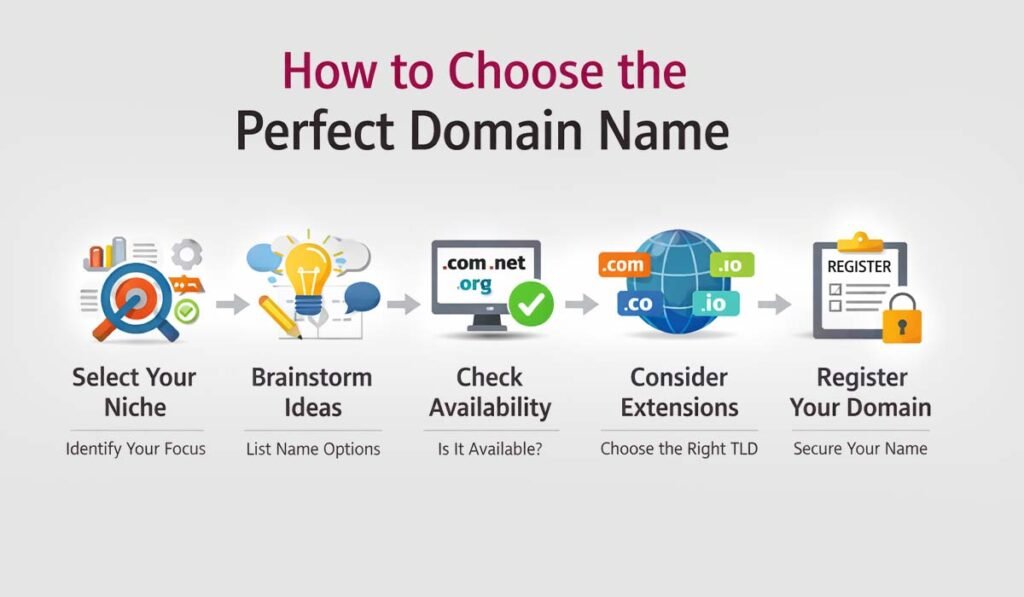
Step 1: Define Your Niche First
The most important step is to select your niche before purchasing a domain. Many beginners buy a domain first and then decide on the topic to focus on. This approach often creates problems.
Some people buy a domain and start working on a niche. Then, after 2 or 3 months, when traffic doesn’t come, they change their niche. But then the problem is that their domain doesn’t match the new topic. This situation affects the blog’s credibility, and the audience gets confused about what the website is actually about.
Search engines also have trouble understanding the type of content a website is publishing.
For example, if your domain is like Blogging.com and you start publishing recipe content, your audience will be confused. Search engines will also be unclear about your website’s actual niche.
According to Google’s Helpful Content Update and quality guidelines, content should be experience-based and helpful. Google also values E-E-A-T (Experience, Expertise, Authoritativeness, Trustworthiness).
If your website’s niche isn’t clear, search engines will have trouble understanding the topic on which you’re building authority. In such a situation, no matter how diligently you write content, ranking can be difficult.
Similarly, when you apply for Google AdSense—one of the most popular monetization methods in blogging—it’s crucial to have a clear website niche and focused content. If the website’s topic isn’t clear and the content is mixed, getting approval can be difficult.
So, the first step is to clarify your niche, then choose a domain name based on that niche and start creating content.
For example, if you want to create a blog about fishing where you will share fishing tips, fishing tools, and fishing guides, your domain name should be related to that niche.
For example:
- fishingpro.com
- fishingguide.com
- fishingtutorials.com
Step 2: Keep It Simple and Memorable
The most important thing when choosing a domain name is that it should be simple and short. People often cannot remember very long or complicated domain names.
If the domain is easy to pronounce and easy to remember, it becomes easier for visitors to visit your website again.
Whatever your niche is, the domain name should be related to it. Try to make the domain clear, short, and easy to understand. This means choosing a name that people can easily remember for the long term.
For example, if your niche is recipes, you can keep the domain name like RecipeToday.com. In this, the niche is clear and the name is also simple and easy to remember.
Key characteristics of a good domain name:
Short and concise (ideally under 15 characters)
Easy to spell and pronounce
Avoids hyphens and numbers when possible
Passes the radio test (people can spell it after hearing it)
Step 3: Think Long-Term
A big mistake I often see beginners make is limiting themselves when choosing a domain name. When choosing a domain, always think about the future. Choose a name that will remain relevant and useful in the long term.
If you buy a domain with a too narrow niche, it can be difficult to expand your content in the future. Sometimes you may even have to buy a new domain again. That’s why choosing a smart and flexible domain name is very helpful.
For example, if you choose a domain like BestRunningShoes2024.com, you limit yourself to just one specific year. But if you choose a domain like RunningShoesGuide.com, you can easily expand your content in the future—such as running tips, shoe reviews, training guides, etc.
Similarly, many people buy domains based solely on trends. When that trend ends, the website’s traffic also decreases.
For example, if someone buys a domain related to Christmas, they’ll only get significant traffic around the Christmas season. Engagement on that website may be very low throughout the rest of the year.
So, whenever you choose a domain, select a domain name that provides long-term benefits.
Always keep future growth in mind and avoid words that limit your content.
Where Should I Buy a Domain Name for Blogging?
Once you have decided on your name, the question arises as to where to buy the domain name. Not every website from which you can buy a domain is secure. Choosing a good domain name provider is very important. Here are some of the top websites from which you can buy a domain.
Recommended Domain Registrars
Registrar | Best For | Key Features |
|---|---|---|
Namecheap | Budget-conscious beginners | Free WHOIS privacy, competitive pricing |
| All-in-one beginner-friendly |
|
Cloudflare Registrar | Tech-savvy users | Wholesale pricing, no markup |
GoDaddy | All-in-one solutions | Bundled services, 24/7 support |
My Recommendation:
I’ve noticed that many beginners don’t believe they can succeed in blogging and earn money online. This is why they end up on websites that offer cheap domain names.
People buy domains quickly after seeing discounts and marketing offers, only to find out later that they’ve chosen the wrong platform and end up incurring losses.
So, my recommendation is to always buy domains from reliable platforms and always check the renewal price before purchasing the domain. Beginners often make this mistake – they only look at the first-year discount and don’t check the renewal price. On many platforms, the first-year price is very low, but the renewal price is quite high.
For example, sometimes you get a domain at a very cheap price, but when the time for renewal comes, the price is quite high. Therefore, it is very important to check the renewal cost beforehand so that there is no budget problem later.
If you ask me for a recommendation, I personally suggest Hostinger. I have been using this platform for a long time and I have not faced any major problem till now. It also offers a good support system and instant AI assistance. If you ever have any issues, you can speak to the support team for assistance.
The final decision is up to you. I’ve shared my recommendations—you can choose the platform that best suits you.
Which Domain Extension Is Best for Blogging?
Domain extensions are very important. Each domain extension is a Top-Level Domain (TLD), such as .com, .net, or .org. Choosing the right extension is crucial because it builds trust in your blog or website and also increases your presence and reach.
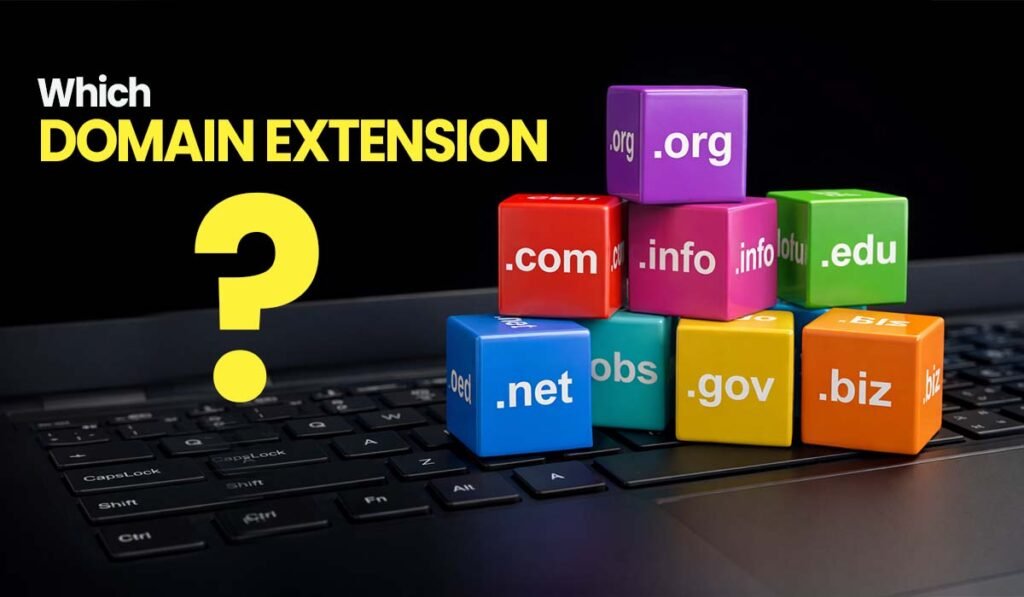
The Gold Standard: .com
Another important tip is to always choose a trusted domain extension. There are many different extensions available on the internet, but the best option for beginners is to use simple and popular extensions, such as .com, .in, .org, or .net. These extensions appear more trustworthy and are easier for people to remember. When a visitor hears your website name, they usually automatically type in .com because .com is the most popular.
Alternative Extensions Worth Considering
While .com remains the gold standard, several alternative extensions have gained credibility over the years:
.org – Ideal for non-profits, communities, and educational blogs
.net – Originally for networks, now acceptable for tech-related blogs
.co – Popular alternative to .com, especially for startups
.io – Tech-focused, popular among developers and SaaS companies
.blog – Specifically designed for bloggers, gaining acceptance
Extensions to Avoid
Domain names that aren’t commonly used or can seem spammy, like .xyz, .click, or .link, which seem cheap and simple, but often trigger spam filters, and people don’t trust such domains, hurting your credibility. Always choose extensions that people can easily recognize and trust.
What Is the Difference Between Domain and Hosting?
Beginners often find it a little difficult to understand what is the difference between domain and hosting. When a new person wants to start blogging, both these terms are completely new for him. That is why people get confused and think that domain and hosting are probably the same thing.
Actually, in simple words, a domain is the name of your website (like example.com), whereas hosting is the place where all the data of your website is stored. Beginners are not clear about this concept in the beginning, hence they think that both are the same thing.
Analogy: Domain = Street Address | Hosting = The Actual House | Website = The Furniture and Decor Inside
Can You Buy a Domain and Hosting from Different Providers?
You can purchase your domain and hosting from different providers. However, many companies nowadays offer both domain and hosting services under one roof. Personally, I find it convenient to have both domain and hosting from the same provider, as setup and management are easier.
As I mentioned, I use Hostinger. When you purchase hosting from them, you often get a free domain (usually for the first year).
But if you already have hosting, you might be wondering, can I purchase my domain from another provider?
The answer is yes, you absolutely can.
For example, suppose my hosting is with Hostinger, but during a sale—like Black Friday—the domain is cheaper at GoDaddy. I could buy the domain from GoDaddy and keep the hosting with Hostinger.
Now the question arises: Do I need to buy hosting again?
No. You don’t need to buy hosting again.
You simply go to your domain’s DNS (Domain Name System) settings and connect the nameservers to your hosting company’s servers. Once the DNS is updated, your domain is automatically linked to your hosting.
This means that:
- The domain can be purchased elsewhere.
- The hosting can be from another provider.
- Simply connecting DNS or nameservers can work.
But if you’re a beginner and don’t understand much about technical matters, the best option is to get the domain and hosting from the same provider. This makes setup easier and management simpler.
Common Domain Name Mistakes to Avoid
There are some mistakes that a new person makes when they start blogging. One or the other of them is definitely making them. So, you have to avoid these mistakes.
Mistake 1: Buying Expired Domains Without Research
The biggest and most common mistake that beginners make when starting blogging is buying an expired domain. You might have heard many bloggers or YouTube gurus saying that it is good to buy expired domains because they already have backlinks and traffic. This is true in some cases, but it can be very risky for beginners.
The biggest problem with expired domains is that you do not know the past history of that domain. It is possible that the domain may have previously had spam backlinks, or someone may have used it for malware, spam or shady activities. Such domains can also have a high spam score. When a domain has a high spam score, search engines, especially Google, don’t trust it as quickly, which can make ranking difficult.
The best strategy for beginners is to start with a fresh and clean domain. A new domain with no spam history is safer and more secure for future blogging.
Purchasing an expired domain requires extensive research. You need to check the domain’s backlink profile, spam score, previous content history, and technical aspects like penalties. These are not easy for beginners to understand.
Therefore, if you’re new to blogging, it’s best to avoid expired domains and start your blog with a fresh domain. Once you’ve gained experience with SEO and domain analysis, you can try expired domains for different projects in the future. However, unless you have proper knowledge of these things, purchasing an expired domain increases the risk of loss.
Mistake 2: Using Irrelevant Domain Names
Never use irrelevant domain names. It is very important that your domain and your content are related to each other.
Suppose your domain is MakeMoneyOnline.com, but you start publishing articles on cat food or dog food on that website. This is a clear mismatch. In such a situation, readers get confused and search engines also do not get a clear signal about the topic of the website.
So always try to ensure that your domain and content are related to the same niche or topic.
For example, suppose your domain is Make Money Online. If it ranks in Google and people who search for “make money online” come to your website, but instead see articles about cat food and dog food, then think to yourself – would a user who searched for “make money online” read articles about cat food or dog food?
Obviously not.
So, it’s better to publish content related to the type of domain you choose. This gives readers a clear understanding and lets search engines know the topic your website is about and which audience is right for your blog.
Mistake 3: Ignoring Trademark Issues
It’s very important to check that the domain name you’re choosing doesn’t violate any existing trademarks. If you use a trademarked name, you could face legal issues in the future and even lose your domain.
All your hard work will be wasted.
Whenever you start looking for a domain, always check the USPTO trademark database (if you’re in the US) or similar resources for your country to confirm that the name you’re choosing isn’t a registered trademark. This step will help you avoid future legal problems.
Mistake 4: Not Securing Variations
Imagine how much hard work you put in and your blog is ready, and then a competitor comes along and registers a separate LTD in your name. They then capitalize on your hard work and run their own blog, driving all the traffic to them.
The best way to avoid this situation is to secure common variations of your domain name once your blog is live and you have the budget—such as different LTDs, common misspellings, and different extensions like .net, .in, .org.
These steps are important because they prevent competitors from misusing your brand and protect your audience from fake websites.
SEO Tips for Domain Names
Now you might be wondering how SEO ties into choosing a domain name. This is very important and shouldn’t be overlooked.
Look, whenever you’re choosing a domain name, always consider that you’ll be working on it for years. Your domain name tells search engines everything—your website, your content, your niche.
So, it’s important to follow these steps with SEO in mind, so that your domain sends a clear and strong signal to both search engines and users in the future.
Do Keywords in Domain Names Really Help Google Rankings?
It’s crucial to conduct proper keyword research when starting a blog or choosing a domain name. When you do keyword research, you’ll have a clear understanding of your topic and whether people are searching for it on Google.
Google’s algorithm updates focus on ensuring your content is high-quality and user-focused. When your content is focused on a single niche and your domain contains keywords related to that niche, it’s easier for search engines to understand your website’s focus.
If you choose an exact match domain, include relevant keywords in your domain, and provide quality content, Google gives you extra value because both your domain and content are related and relevant.
If you consistently publish content in the same niche, Google begins to trust your website over time. This way, you build authority in your niche, and your chances of ranking in Google also increase.
Does Domain Name Affect SEO?
Beyond keywords, several domain-related factors can influence your SEO performance:
Domain Age: Older domains often have an advantage because they have had more time to build authority and backlinks. However, a new domain with quality content can still rank well with consistent effort.
Domain History: If a domain was previously penalized or associated with spam, it can negatively impact your SEO. Always research a domain’s history before purchasing.
SSL Certificate: Using HTTPS (which requires an SSL certificate) is a confirmed ranking factor. Most reputable hosts offer free SSL certificates through Let’s Encrypt.
Best Practices for SEO-Friendly Domains
Include your primary keyword naturally if possible
Keep the domain name short and memorable
Use hyphens sparingly (preferably not at all)
Choose a reputable TLD (.com, .org, .net)
Ensure the domain has a clean history
Frequently Asked Questions
These are some common questions that people often ask when they want to start a new blog or want to start blogging.
Q1. Can I change my domain name later if I want?
A: Yes, it’s technically possible, but there are challenges. You’ll lose SEO authority, need to set up redirects, and rebuild brand recognition. So it’s best to be careful when selecting a domain.
Q2. Is it necessary to buy multiple domain extensions like .com, .net, or .org?
A: No, just one domain is enough for running. But for brand protection, it’s smart to have two or three variations, such as .com and your country-specific TLD.
Q3. How can I check if a domain name is free?
A: Go to domain registrar websites like Namecheap or GoDaddy and search for your desired name. There you can see availability and pricing instantly.
Q4. My preferred .com is already taken. What should I do?
A: Try a few variations — adding relevant words (hub, guide, pro), or using a country-specific extension. You can also consider personal brand name or creative combination.
Q5. Are premium domains worth buying?
A: Usually not for beginners. Premium domains are quite expensive (hundreds or thousands). It is more useful to invest in budget hosting, tools, and content creation.
Q6. Does the age of a domain help with SEO?
A: Domain age is only a minor factor. It is important to publish consistent and high-quality content. A new domain with excellent content can easily outrank an old, low-quality domain.
Q7. Can I get a free domain?
A: A permanently free domain is practically impossible. Some hosting providers offer a free domain for the first year with the hosting plan. Free extensions like .tk or .ml are not recommended for beginners due to credibility and spam filter issues.
Q8. Should I buy an expired domain for my blog?
A: A fresh domain is best for beginners. Expired domains can have hidden risks like spam backlinks, penalties, or a negative history. If you don’t have experience analyzing backlink and domain metrics, the risk is higher.
Q9. Can a new domain make money through blogging?
A: Absolutely! Even a new domain can generate income with proper SEO and consistent quality content. Many new blogs start earning within 6–12 months. Always focus on providing value.
Q10. How long should a domain name be?
A: The ideal length is less than 15 characters. Short domains are easier to remember and type/share. But don’t compromise on clarity—a slightly longer domain that clearly explains the niche is better.
Q11. Should I include keywords in my domain?
A: Keywords are helpful for users and search engines, but not mandatory. Include them if they fit naturally; otherwise, focus on a brandable and memorable domain.
Q12. Should my domain match my blog niche exactly?
A: The domain should give visitors an idea of what the blog is about, but don’t be overly specific. If covering multiple topics, a broader domain is better. You can consider a personal name as a domain for flexibility.
Q13. My desired domain is taken. Any alternatives?
A: Try prefix/suffix (get, my, the, blog, guide), different TLD, or creative variations. Avoid hyphens or numbers as these make it difficult to remember and share.
Final Thoughts
Your domain name isn’t just a web address; it’s your website’s identity. When you want to start a blog, every step is important. But choosing a domain is the most fundamental and powerful step.
Choosing the wrong domain name can waste years of hard work. However, choosing the right domain name won’t require as much struggle. You avoid many problems. Your blogging journey will be much smoother, allowing you to produce better work and perform better in the long run.
If you are planning to start a blog and are confused about buying a domain, I have clearly explained how you can do it in this article. If you follow these steps, you can choose the best domain name.
- First of all, keep your domain name unique.
- Choose a simple and relevant domain name.
- And publish valuable content consistently.
If you do this, your blog will grow and search engines will also show interest in your website.
And the most important thing is that just creating a blog or choosing the right domain name is not enough. The most important thing is that you provide helpful content. Give value to your users. Write content for the reader, not for search engines.
Over time, your blog can become a brand. So always focus on providing value to users.
Here’s a simple formula for becoming a successful blogger:
Create a blog → Choose a good domain name → Write quality articles → Be patient → And keep publishing new quality articles with consistency.

Other Articles

Hemingway vs Grammarly: Which Tool Should Bloggers Use?




No Comment! Be the first one.