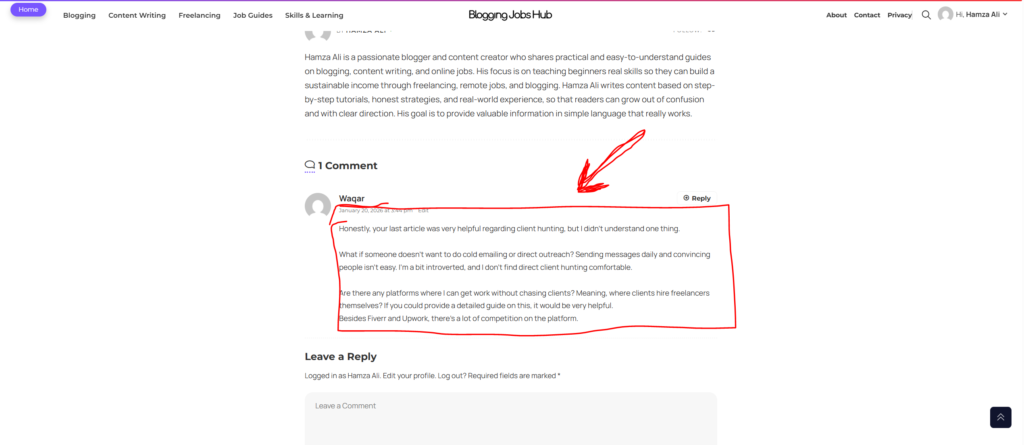
Yesterday, I received an interesting comment on my previous article. In that article, I explained how you can do direct client hunting. But in the comments, someone asked a simple question: What if I don’t want to do client hunting and only want to launch through a platform?
To be honest, this is a very important question. Not everyone can do direct client hunting. Many people have doubts about what to do if they don’t get a reply after sending a cold email. This is a long-term game, and there’s no guarantee of results. Sometimes they get a reply, sometimes they don’t. This process can be a bit frustrating, especially for beginners.
That’s why I felt it was important to discuss this question. Today we’ll talk about this topic.
I’m Ghulam Mohiuddin and I’ve been working in online business, WordPress, and digital marketing for the last 5 years. When I started, I had a lot of doubts. And honestly, there was no one who could guide me properly. I used to watch tutorials on YouTube, try it myself, make mistakes, and learn. Alhamdulillah, after 5 years of hard work, today I am in a position where I can give you the right direction.
First of all, I’d like to thank my brother, Jism, who commented and asked this question. He gave me the opportunity to share these things with you. If you have any specific questions, please feel free to ask.
In this article, I’m sharing a simple approach: How can you get started freelancing without client hunting? Which platform is best for beginners? How to optimize your profile? And how to choose the right direction without wasting time and money?
This topic is also important because many people, whether new to freelancing or already in it, want stable and predictable work. Whether you’re in digital marketing, WordPress development, or any other service, platforms provide a structured system where you can focus solely on your skills. The stress of constantly searching for clients is reduced.
So let’s move beyond Fiverr and Upwork and talk about some platforms that can be helpful for beginners. And if you are already working and want to increase your earnings, then I will share in detail which platforms will be better for you and how to use them in the right way.
What Are Freelancing Platforms and Why Do They Matter?
Freelancing platforms are essentially online marketplaces where freelancers create their profiles, showcase their skills, and connect with clients who post jobs or are looking for services. Simply put, these platforms act as a bridge between your skills and paid projects. Clients come to the platform themselves for help, so you don’t need to chase them.
In my opinion, these platforms are game-changers for beginners. When I started digital marketing, I had no network or way to find direct clients. I set up my profile on the site, optimized it with keywords like “WordPress Setup for Small Businesses”, and slowly clients started finding me.
Most of my projects were portfolio related. I used to show in my service that I can create a website for you so that you can get clients online. I made a strategy. Freelancers became my target audience.
For example, I targeted those people on Fiverr who were creating gigs themselves and waiting for clients. Many times the problem is that the client asks for a portfolio and the freelancer does not have a proper website. I offered them that I would create a WordPress portfolio website for them to showcase their work. This way, I got my first clients from freelancing platforms – and interestingly, I targeted freelancers.
Now let’s talk about why beginners like these platforms.
- There is a secure payment system. The platform holds the money and releases it when the work is completed.
- Then there are built-in tools for proposals or gigs.
- There is a rating system that builds your credibility over time.
- And most importantly – the risk of scam or non-payment is greatly reduced. This is a huge stress for new freelancers.
Businesses also use these platforms because they’re efficient. If a small business owner needs financial advice or a WordPress site, they simply post a job and receive offers from qualified freelancers. They don’t need to search multiple websites. By looking at reviews and past work, they can easily decide who is right for their project.
In my experience, I use freelancing platforms for one major reason: secure payment. If I’m hunting for direct clients, the first and most difficult question is—how will I get paid? If I ask for an advance, the client is worried that this guy might run away with the money. And if the client doesn’t give an advance, the freelancer is worried whether he will get paid or not. There is a trust issue on both sides.
That’s why freelancing platforms are relevant even in 2026 and are becoming more popular day by day.
But there is a problem. Not every platform is beginner friendly. In some places, the competition is so high that it becomes difficult for a new freelancer to get a chance. So today I am going to tell you about such platforms which can be better for beginners and where you can start in a smart way.
Key Factors to Consider Before Choosing a Freelancing Platform
Before choosing a freelancing platform, it’s important to understand which factors matter most. I’ve tried many platforms over the years, and honestly, not all of them are beginner-friendly. If you don’t want to go client hunting and just get work through the platform, it’s crucial to focus on these factors.
The first thing to consider is ease of use and onboarding. Beginners should have a simple setup process. Choose a platform that makes it easy to create a profile and upload work samples. Avoid platforms that require advanced certifications or complicated verifications from the start.
When I started freelancing, some platforms asked me for degrees and certificates. I was applying for article writing service and they were demanding certificates. I was new, I did not understand, so I skipped that platform. I directly went to the platform where nothing was being demanded in the beginning. This thing is very important for a beginner.
Now let’s talk about free and paid platforms. Some platforms are free, some are paid. Most of them charge commission of 10% to 20%. Some provide basic account for free but charge for premium features like highlighted profile or extra visibility. I’ll discuss the cost breakdown in detail later, but always consider how these fees will affect your earnings.
Then comes the competition level. Beginner platforms tend to be more competitive. However, if the platform has niche filters, such as WordPress, Finance, or a section dedicated to a specific skill, you have a better chance of standing out there. Therefore, I always recommend focusing on your niche. Also, look for micro-niches within the niche. Check user reviews to see how saturated your skill is.
The most important thing is payment protection and security. If you’re a beginner and don’t have much freelancing experience, don’t ignore this factor. Good platforms use an escrow system or guarantee payment upon project completion.
Another very practical point—payment method. Always choose a platform that supports your local currency or the payment methods available in your country. If a platform only supports PayPal, this can be a problem for freelancers living in Pakistan, as PayPal is not officially available there. Therefore, I personally avoid platforms that only offer a PayPal option. This may seem trivial, but what’s the point of a platform if it’s difficult to receive earnings?
Then comes support and community. Helpful support systems, community forums, or AI tools are very useful for beginners. By 2026, many platforms have added AI-based profile optimization tools that give your profile better visibility. These features can be an extra boost for beginners.
Keep all these factors in mind when choosing a platform. Don’t join just by looking at the name or listening to the hype. Make smart decisions, because the right platform saves you time and also makes earning faster.
Top Freelancing Platforms for Beginners (No Client Hunting Needed)
Based on my personal experience and the research I’ve done on these platforms, I’ve found a few platforms that I like, so I’m sharing them with you. These are specifically for beginners who want clients to come to them. I selected them because they have a low entry barrier, are easy to setup, and offer good features for client engagement.
I’ll explain each platform, including how it works, its pros and cons, pricing, and my personal experience.
Fiverr: Best for Quick Gigs and Beginners
The first platform is undoubtedly Fiverr. It’s very popular for gigs and creative services.
In my early days, I took on my first freelancing projects in WordPress customization on Fiverr. It’s a gig-based platform where you create fixed-price offers, like “I’ll set up your WordPress website for $50.” There’s no bidding system. You create a gig, the client searches, views your gig, and if they like it, places a direct order or messages you.
You need to set up your profile properly—add samples, use the right keywords, and create 3 packages: Basic, Standard, and Premium. The client searches, views your gig, and places an order. If your gig is optimized, the system runs much smoother.
This platform is beginner-friendly. No experience certificate is required to get started. Setup is fast. In 2026, Fiverr also added AI tools that help with gig suggestions and optimization. This is a good option for digital marketing tasks like social media graphics, SEO, WordPress setup, etc.
But an important tip: If you want to get orders quickly on Fiverr, find micro-niches within your niche. Competition is very high in popular categories. You may need to set a little lower pricing initially to get reviews. But as reviews start coming in, you can gradually increase your price.
Talking about pricing, joining Fiverr is free. Creating a gig is also free. But a 20% commission is deducted from every order. There is also a Fiverr Pro option which costs around $29 per month for verified status, but beginners do not need it in the beginning.
Beginner average earning can be $200 to $500 per month once some reviews come in. Sharing my personal experience, I set up a finance blog and created WordPress related niche gigs. In the first month, I earned around $650, which was a huge achievement for me at that time. As I mentioned earlier, I used to create portfolio websites for freelancers, and this strategy gave me good earnings on Fiverr.
With the right strategy, this platform can be a strong start for beginners.
Upwork: Ideal for Long-Term Projects
Now let’s talk about Upwork. This platform is considered the best for long-term projects. After Fiverr, the biggest funding projects I received came from Upwork.
Upwork is a bidding platform. Clients post jobs here, and freelancers send proposals. However, if your profile is strong, direct invites also come to Upwork these days. This means that the client invites you for the project themselves. In this way, the platform does some of the client hunting.
How does it work? You create a profile. Showcase your skills and build a strong portfolio. Then, browse jobs or find relevant jobs through AI matching. You submit a proposal. You get a limited number of free connections each month to send proposals.
What are its pros? A wide variety of online business and digital marketing jobs are available. Payments are secured through Escrow. There’s a built-in time tracker for hourly projects. An AI assistant helps with writing proposals.
The approval process for beginners is a bit competitive and can take a few days. If you run out of connections, you’ll need to purchase additional ones. This can be a bit challenging for beginners.
Pricing is simple. The Basic account is free. 10% commission is applied to earnings (with a sliding structure in some cases). You get 10 free connections every month. Extra connections are around $0.15 per connection. Plus membership is around $14.99 per month, which offers more connections and visibility.
My personal experience was that I specialized in WordPress for e-commerce finance sites. Within two weeks, I landed a project worth $900+. If you want to scale up to full-time freelancing, Upwork is a strong option, but starting can be a bit tough for a complete beginner.
Freelancer.com: Good for Contests and Variety
Now let’s talk about Freelancer.com. This platform is good for testing and diverse opportunities.
I participated in digital marketing contests here in the early stages. There is a system of contests here. You submit your work, and if the client likes it, you win and get paid. This is a great option for building a portfolio without direct pitching.
Before blogging and website designing, I worked in graphic design. There, I participated in photo manipulation contests. I attempted several projects, but only won one. But when I did win, I earned $200—which was a huge deal for me at the time.
How does it work? Create a profile, bid on jobs, or join contests. Clients post projects daily. You can send proposals or submit contest entries.
Pros: Low entry barrier. Contests provide experience. 24/7 support is available. WordPress and finance niches are also in high demand.
Cons: Bidding sometimes becomes a numbers game. Fees can be a bit high for smaller projects. Some low-quality jobs are available, so filtering is essential.
Pricing is simple. Joining is free. There’s a 10% or $10 fee (whichever is higher). Membership plans start at around $4.95 per month, which offer extra bids and slightly lower fees.
Beginners can earn $100 to $300 through contests if they win. My $200 photo manipulation project came from this platform.
Both platforms have their own styles. Upwork is strong for long-term, serious projects, while Freelancer.com is a good option for testing and polishing skills.
Guru.com: Lower Competition Option
Now let’s talk about Guru.com. I haven’t personally worked on it much or earned much from it, but many content creators and freelancers recommend it. They say it’s not as saturated as Upwork.
Its system is simple. Set up a profile, apply for jobs, or collaborate through Workspace. Clients can view your portfolio and contact you directly.
Its biggest advantages are flexible payment terms, secure escrow, and relatively low competition in digital marketing. It’s good for long-term projects, but the job pool is a bit small. The interface can feel a bit old-fashioned, and the AI features are still basic—upgrades are expected in the future.
Pricing is simple. The basic account is free and incurs a 9% fee. Paid plans start at around $11.95, with slightly lower fees. Beginners can try it here and it’s possible to earn $200 to $600 per month. I haven’t earned it myself, but if you want to avoid client hunting, you can try it.
PeoplePerHour: Beginner-Friendly for Hourly and Fixed Gigs
Now let’s talk about PeoplePerHour. It’s beginner-friendly, especially for hourly work and fixed-price gigs. It’s been helpful for my WordPress gigs, especially its hourly earning system.
The system is somewhat similar to Fiverr, but with a more UK/EU focus. You can offer pre-packaged services or bid on job posts. AI matches you with relevant jobs.
The advantage of this is that even small tasks can generate earnings. The amounts can be small, but they matter a lot for beginners. There’s strong demand in digital marketing. Workstream tools are helpful for project management.
Competition is high, but manageable due to geography. Fees are 20% on the first $500 and 7.5% thereafter. Joining is free. Premium plans are around £14 per month, which boost visibility. Beginners can earn $300 to $700 per month with consistent work.
Tip: Use certification badges. When I got WordPress certification, I started getting more invites.
Contra: Modern Zero-Commission Platform
Now let’s talk about a modern platform – Contra. You might not have heard of it much. It’s relatively new and a good option for digital marketing and tech freelancers.
Its system is portfolio-focused. Create a profile, showcase your portfolio, browse clients and hire directly. There’s no bidding phase. Best of all – zero commission. Clients pay directly.
The interface is modern and focused on independent freelancers. The community vibe is strong, networking happens naturally without direct hunting. But the downsides are that the user base is still small, job variety is limited, and some features are still under development. In some cases, there is also an invite-only system.
It is completely free for freelancers. Active beginners can earn $400 to $1000 per month with a strong profile. Since it is new to the market, early movers may have an advantage.
Legiit: Niche Platform for Digital Marketing and SEO
Now let’s talk about legitimacy. If you are in digital marketing, SEO, WordPress, or online business services, this niche-based platform may be best for you.
The system is similar to Fiverr—create a service listing, clients place direct orders. Its biggest advantage is low competition and high CPC niches. Approval is relatively easy.
The downside is that it’s niche-specific, not suitable for general services. There’s a 15% commission cut. Listing is free. A $5–$10 boost can increase visibility. Beginners can earn $200 to $500 per month in the digital marketing niche. I’ve also created a profile for SEO gigs here—let’s see what results.
Common Mistakes Beginners Make on Freelancing Platforms
Now for a little important part—common mistakes made by beginners.
- First mistake: Generic description. If you simply write “I am a WordPress developer,” no one will notice. Use relevant keywords, provide real examples, and optimize for your niche.
- Second mistake: Forever underpricing. It’s okay to start low, but increase your rates once you start getting reviews. Otherwise, you’ll always be stuck with low-budget clients.
- Third mistake: Ignoring reviews. Poor communication leads to a drop in ratings. Reply quickly, and go the extra mile to keep clients happy and leave a 5-star review.
- Fourth mistake: Starting work without understanding the fee structure. Read the terms carefully. For example, Upwork’s sliding scale model reduces fees in the long term—if you understand it, you can save more.
Most important tip: Don’t chase quantity. Focus on quality. Build sustainable income. A strong profile, a clear niche, and consistent delivery set you up for long-term success.
FAQ: Common Questions About Freelancing Platforms
Is Joining Freelancing Platforms Worth the Cost?
Absolutely, if you choose wisely. In my experience, 10-20% fees are nothing compared to security and steady client flow. If you want to avoid client hunting, it’s priceless—I recovered the cost on my first gig. The time spent prospecting for solo outreach is also a hidden cost.
How Much Do Freelancing Platforms Really Cost?
The cost depends on the platform. Most are free to join, but commissions range from 0% (Contra) to 20% (Fiverr). Add-ons like Upwork’s $14.99/month membership or Fiverr’s $29/month Pro can add up to $100-300/year. Hidden costs include payout fees (1-2%) and taxes. Generally, assuming a 15-25% earnings overhead, it’s still cheaper than agencies.
Which Platform Is Best for Beginners?
Fiverr or PeoplePerHour are better for ease, especially after the 2026 updates. They’re gig-focused, so clients will find you. If you want project-based work, Upwork’s AI matching is helpful. Choose based on your niche—Legiit is a good option for digital marketing.
Free vs Paid Accounts – Which Is Better?
A free account is perfect for starting out. You can earn without any upfront cost. But paid upgrades, like Upwork Plus, boost visibility by 2-3x and make it easier to find gigs. I also started with free and invested after earning $500—I got a quick return. For beginners, try the free one first, then upgrade after seeing the results.
Final Thoughts
If you use a smart approach, you can generate good income in freelancing even without aggressive client hunting.
Here’s my simple process:
- First, choose a freelancing niche that suits you, such as financial advising or digital marketing. This will ensure you work within your niche without unnecessary difficulty. Also, look for micro-niches within your niche so clients can easily find you. Clients will have a clear understanding of what you do, and you’ll have an idea of how much work goes into a gig or project.
- Build a quality profile. Add high-quality photos, write a detailed biography, and build a strong portfolio. Always highlight the client’s problem and explain your solution. This will convince the client that “Yes, this guy can solve my problem.” This step significantly boosts your hiring chances.
- Always maintain excellent delivery. Maintain 4-5 star reviews to boost your algorithm and get repeat clients. Asking for feedback from clients may seem a little awkward at first, but your work should be of such quality that the client is happy to leave a review. If you deliver a little extra, the client will be happy and will naturally leave a review.
- Once you start earning, you can invest in premium features, but don’t rush. Always keep learning something new so you can become a pro in your field.
If you follow these steps, you can become a good freelancer.
Freelancing platforms are simple and direct for beginners. You can also find clients through client hunting, but if you’re working through a platform, optimizing your profile is crucial. Showcase your skills well, maintain a strong portfolio, and choose the right platform based on your skills. Work value deals, maintain consistency, focus on quality rather than quantity, and start small and scale gradually.
If these tips are helpful to you, please comment and let us know which platform you would choose. I’m genuinely interested to see.
And if you have specific questions or need help with something, the comments section is yours. Ask, and I’ll definitely guide you.

Ghulam Muhiudeen is a passionate blogger, SEO specialist, and online earning expert. He started his career with freelancing and provided content writing and website designing services on Fiverr from 2022 to 2024. During this time, he experienced firsthand the market’s intense competition, algorithm changes, and inconsistent income.